GEORGE COLEMAN And The Coleman Family Legacy
Story and Photography by JD Cohen, Edited by Theresa Palermo
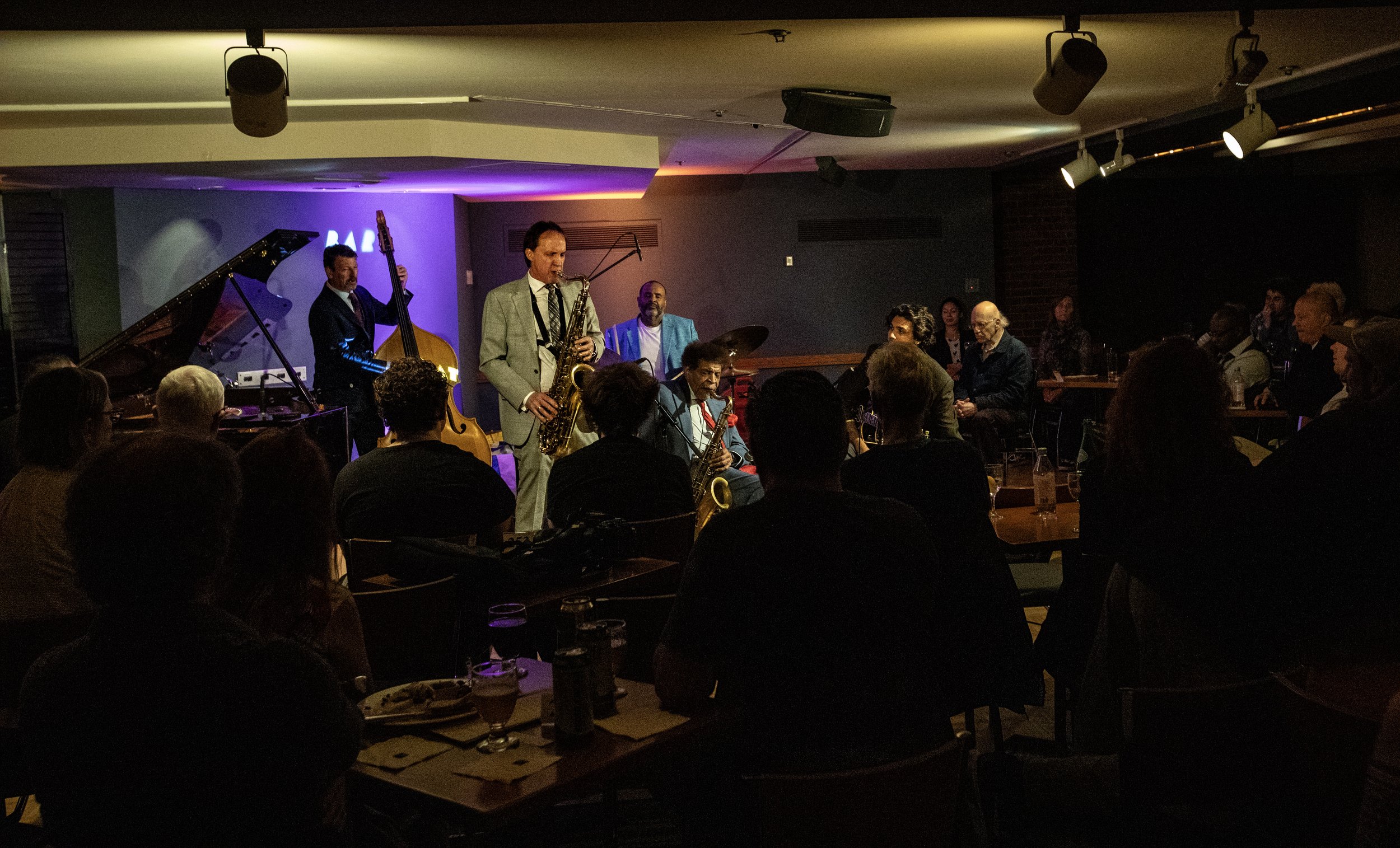
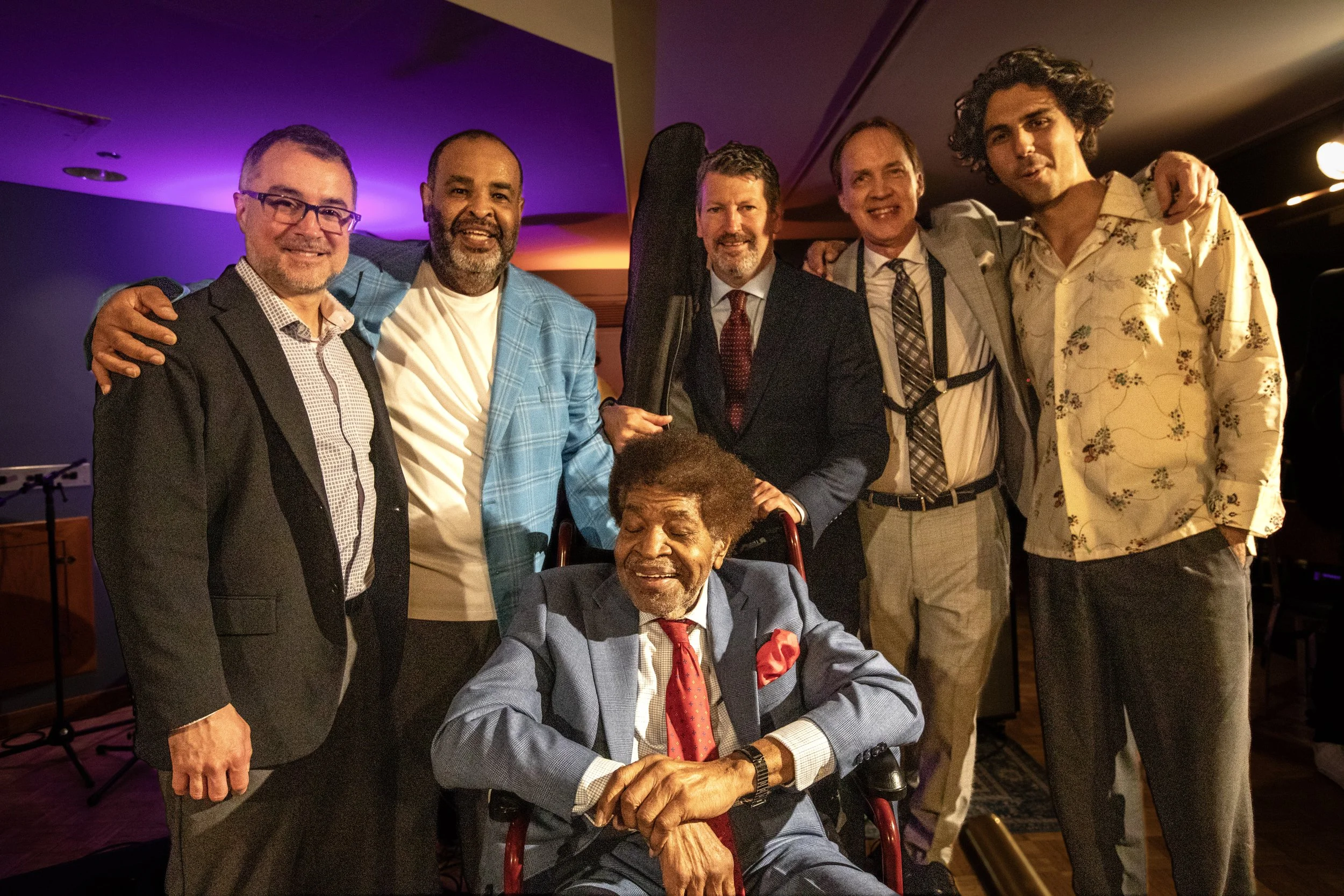
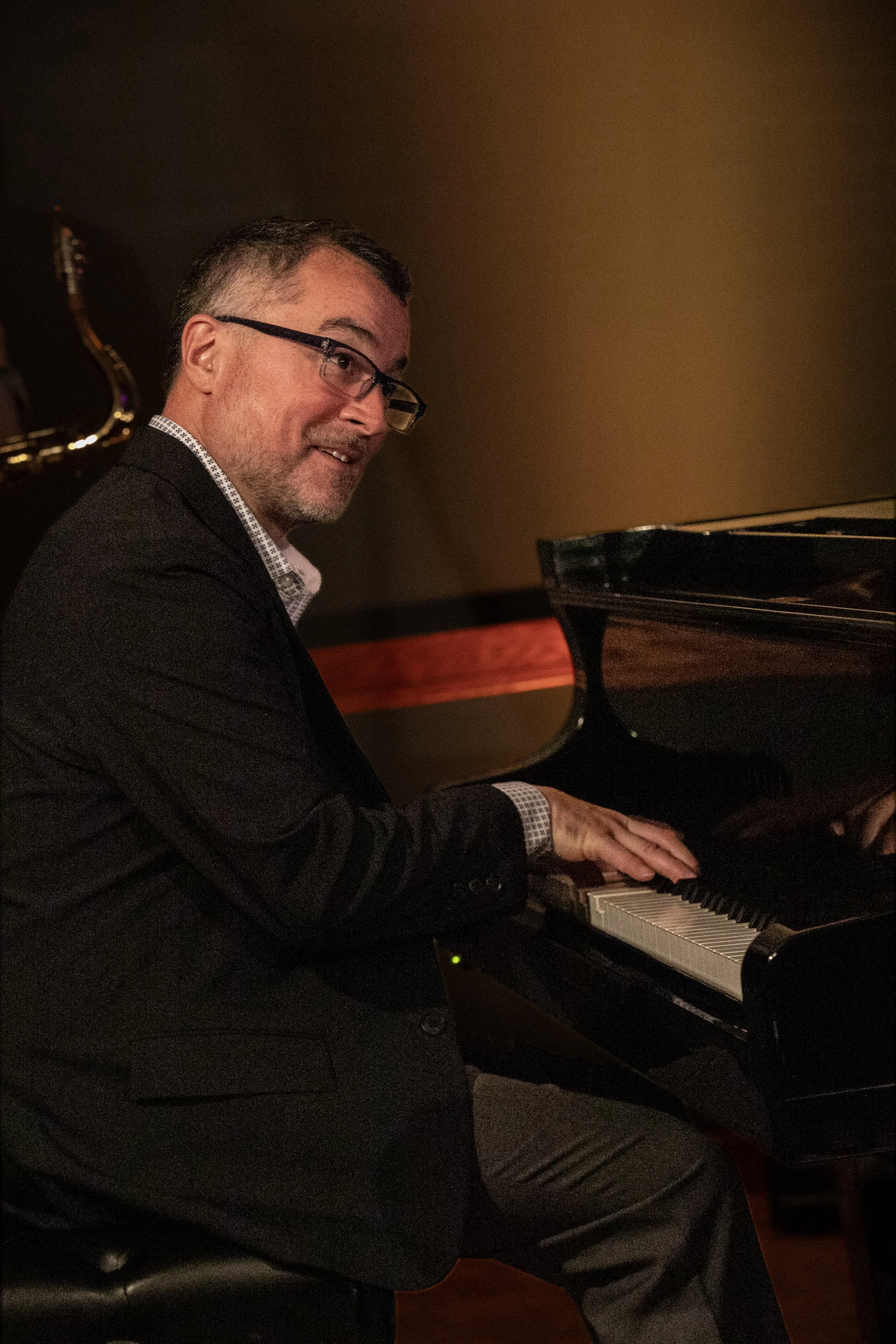
On September 18 and 19th, George Coleman played four shows at Boston’s Regattabar. This was Coleman's third appearance at the Regattabar in as many years and Coleman again took the stage with his son, drummer George Coleman Jr., pianist Seán Lyons, saxophonist Steve Myerson, bassist John Webber and guitarist Leo Larrett.
The remarkable thing about Coleman's continuing career is not just that he is still performing at the age of 91; it's that he can still get on stage and inspire an audience to listen.
There is a special kind of magic that happens when an artist who has spent a lifetime mastering his craft performs for a live audience. The audience is not just hearing music; they are experiencing history.
Legends are often treated as figures frozen in time. Their greatest recordings are preserved, their accomplishments catalogued and their importance safely established. Coleman is something different. He is still very much participating in the music.
George Coleman belongs to that rare category of musicians for whom the distinction between history and the present has almost disappeared. At 91, the Memphis-born saxophonist remains an active performer, composer, teacher and improviser. He is a living connection to several generations of American jazz, from the blues clubs of Memphis and the bebop revolution to Miles Davis, Herbie Hancock, Charles Mingus and the generations of musicians who followed them.
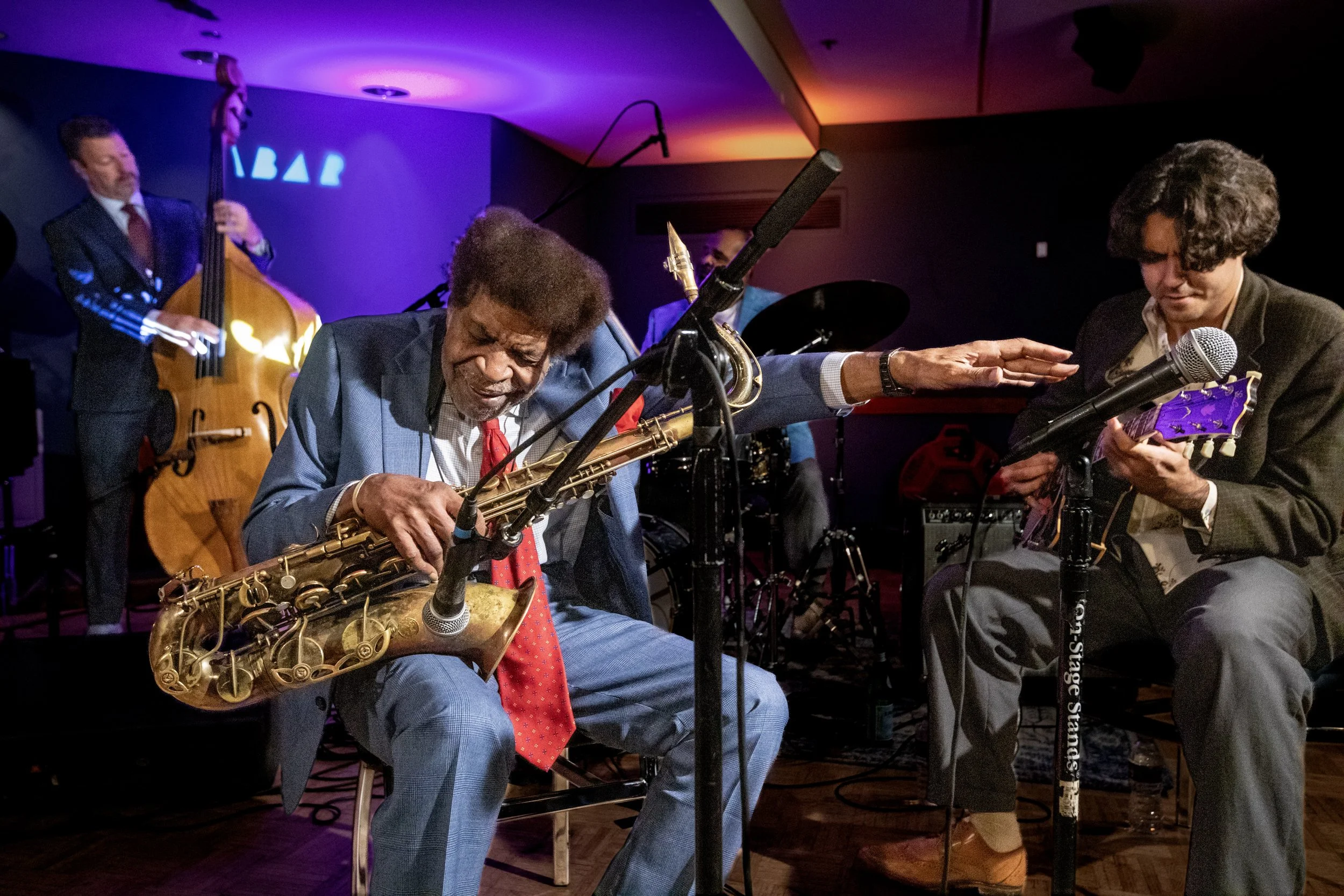
When George Coleman performs, he continues to improvise and investigate the possibilities of the music. At 91, he remains curious, demanding, unpredictable and capable of surprise. And that may be the most compelling part of his legacy.
At the Regattabar, Coleman and his band played an impromptu set of jazz standards. Without a prepared setlist, Coleman called out each tune while his bandmates hoped they know the material and can follow along. This year's sets included wonderful and often inspired versions of Stars Fell On Alabama, Road Song, Mambo Inn, Oleo, On Green Dolphin Street, When Sunny Gets Blue, Parker’s Mood, Autumn Leaves and My Funny Valentine. Coleman seemed in especially high spirits during the final performance, smiling and singing along during several songs.
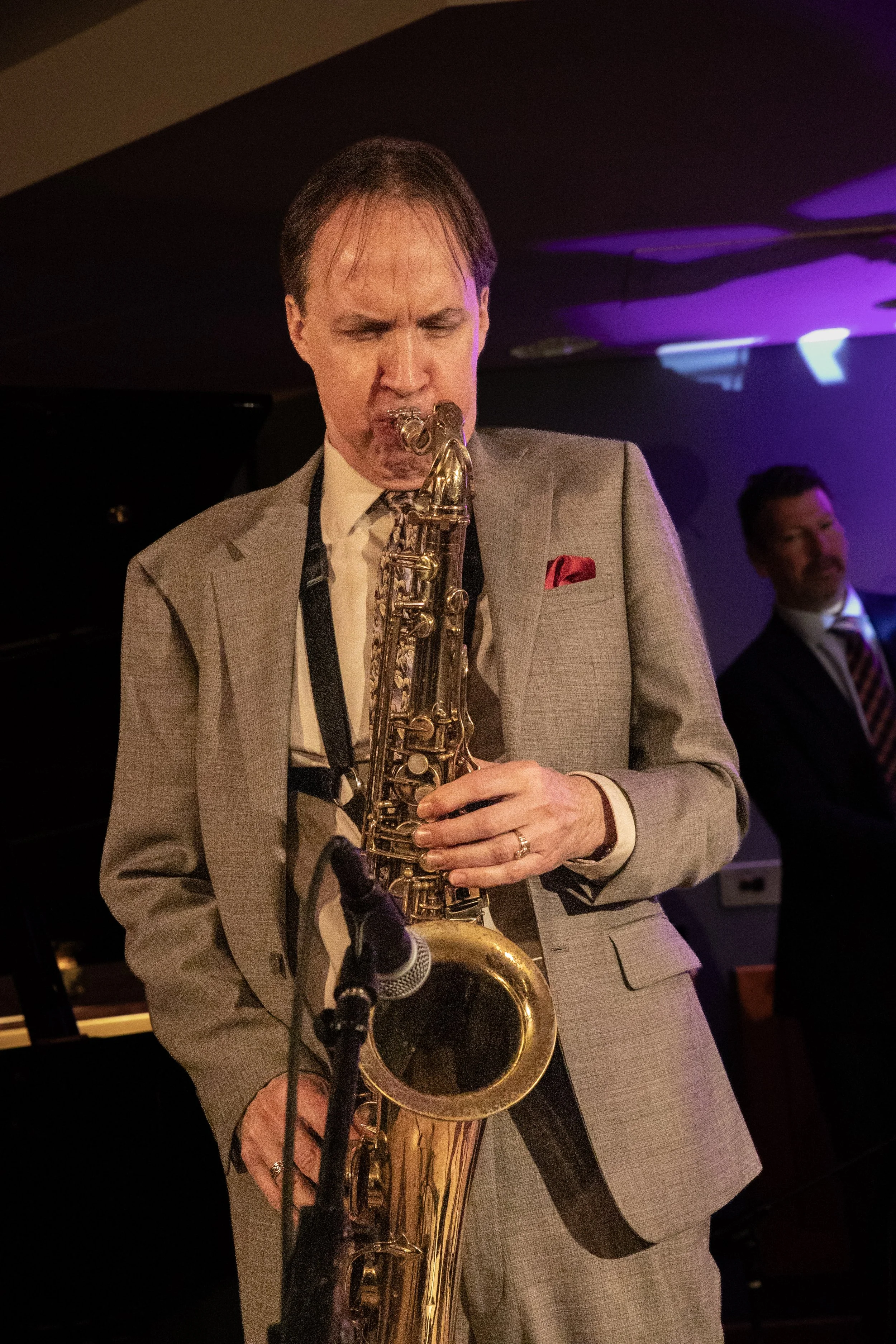
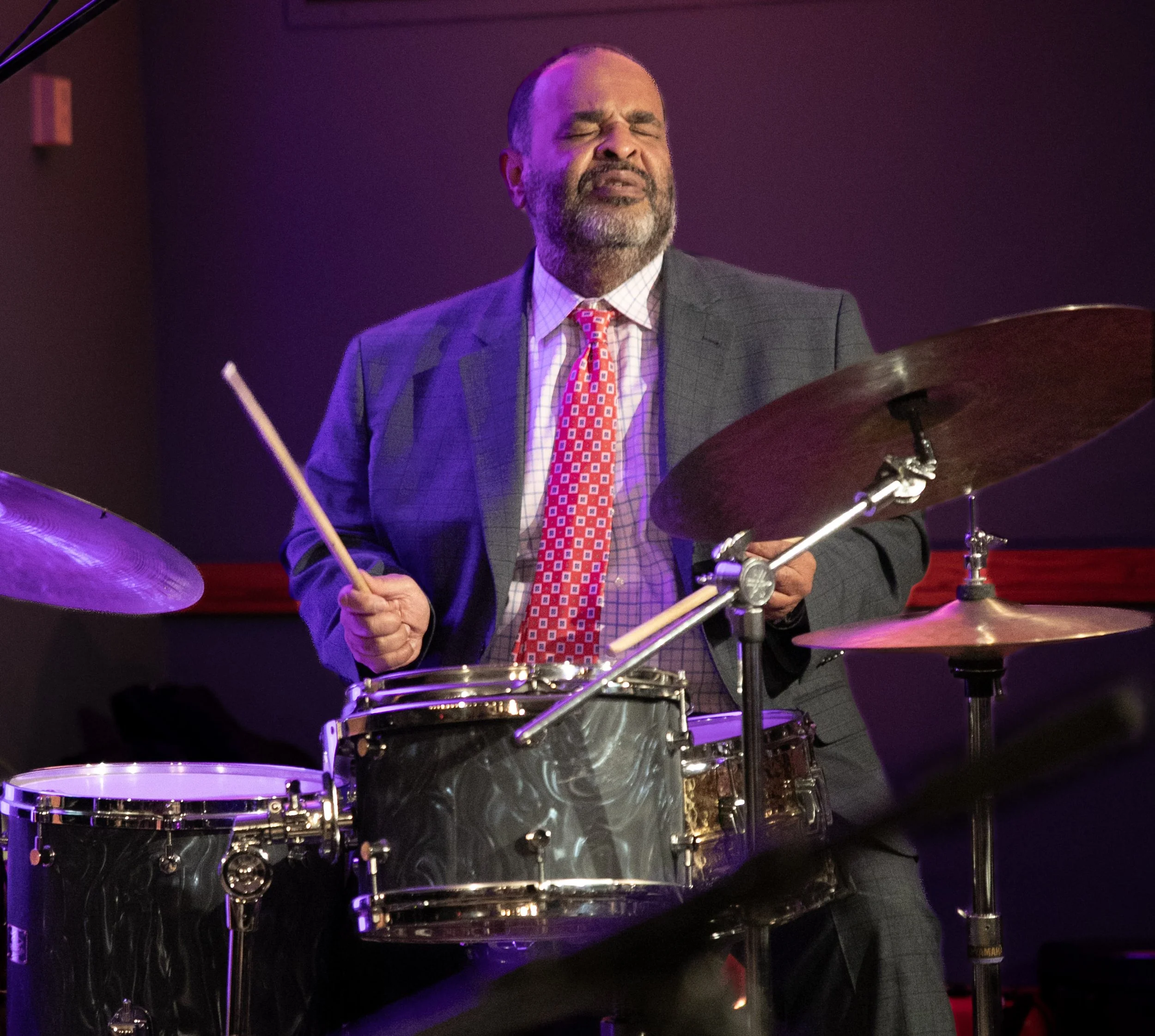
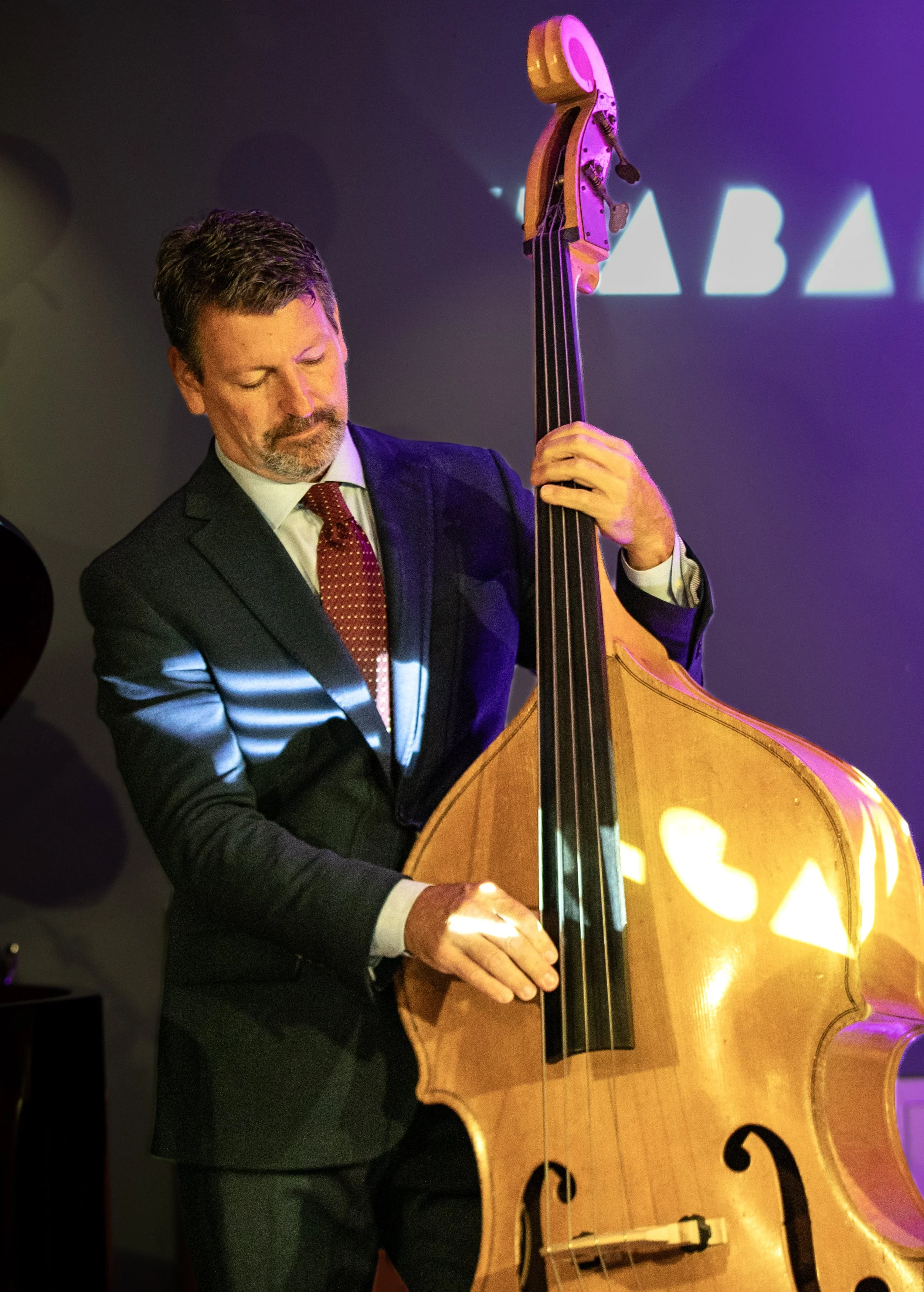
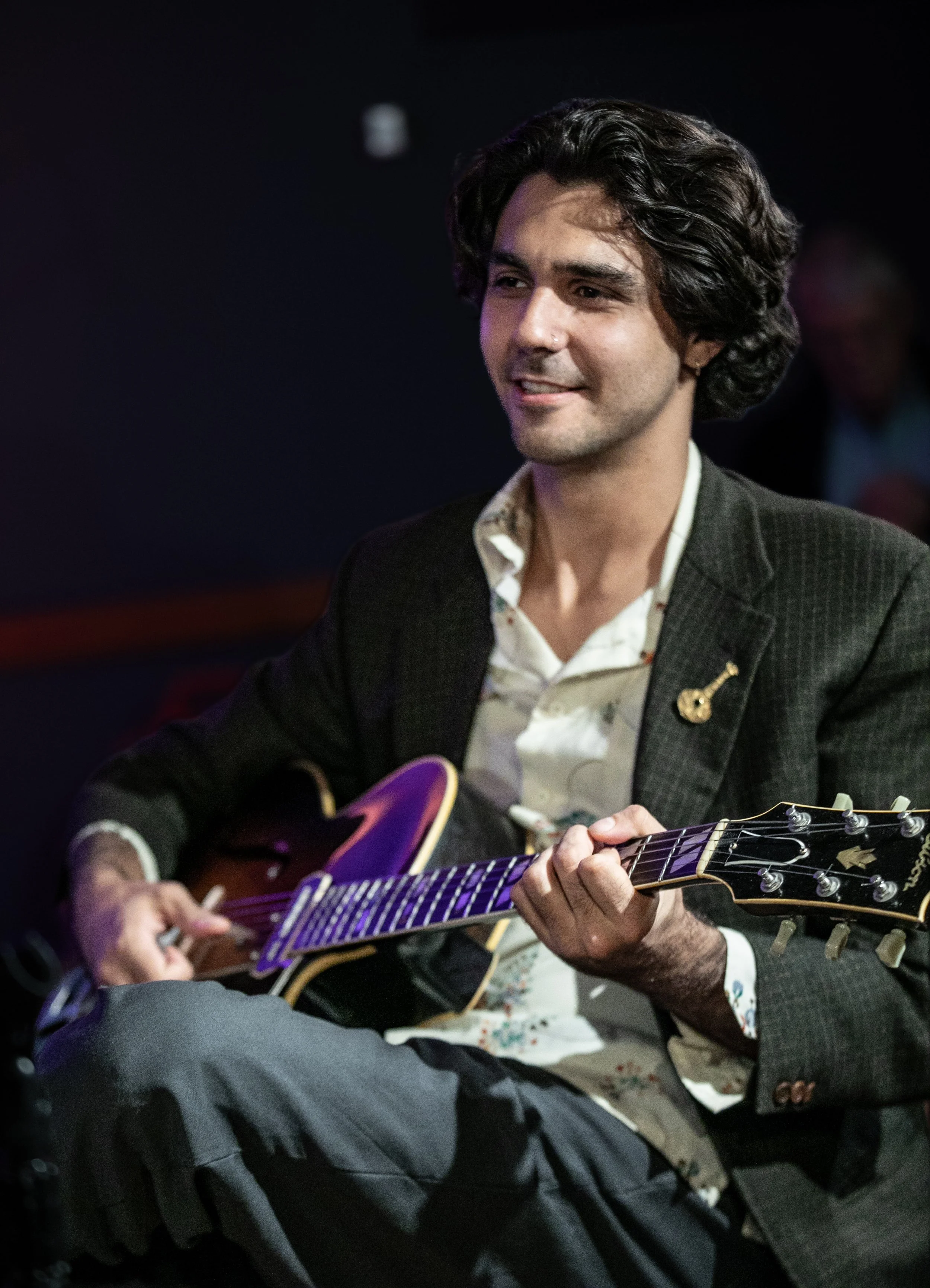
Shortly after the Boston performance, I had an opportunity to speak with Coleman Jr. about performing alongside his father, the musicians who shaped his upbringing, and a recording project dedicated to the compositions of his mother, a talented bassist, organist, vocalist, and composer who passed away in 2010. Our conversation explored the demands of playing with a master, the importance of listening, and the musical legacy that continues to develop across generations.
EDITED INTERVIEW • GEORGE COLEMAN JR.
George Coleman Jr. on His Father's Legacy, the Art of Listening, and the Music That Shaped Him
George Coleman Jr. has spent his life surrounded by some of the most important figures in jazz. His father, legendary saxophonist George Coleman Sr., remains an active performer and teacher at 91, continuing to challenge musicians on the bandstand while sharing the knowledge accumulated over a remarkable career.
JD Cohen: You had a great reception in Boston. How did you feel the shows went?
George Coleman Jr.: I thought things went really well. Saturday was better than Friday because we had a chance to warm up and get used to the room and its sound. We only play there about once a year, so it almost feels like going to a new venue every time. The sound during a soundcheck is very different from the sound during a performance when the room is filled with people. My father and I are both old-school musicians. We play for the people. We don't play just for the musicians in the crowd or for ourselves. We play to entertain people. Someone once said to me, "It's not called show art. It's called show business," for a reason. Artists should remain true to themselves. You shouldn't change what you do just to accommodate a crowd. That's usually the kiss of death. But you should keep the audience in mind when choosing tunes and shaping a performance. That's something George does all the time. He might tell us what we're going to play before we go onstage, but nine times out of ten, it changes. That's not unusual for musicians of his generation. They hired you because they expect you to step up to the plate. You're in the big leagues now.
JD Cohen: How did the current band come together? How long have you been playing with this lineup?
George Coleman Jr.: John Weber and I are probably the veterans of the band. We've been playing with Big George on and off for quite a few years. Steve and Leo are newer members, having joined within the last two or three years. Musicians get busy, and their schedules change. Sometimes you bring in younger players because they're more flexible and eager to work. That's how these things evolve. The piano chair is particularly demanding. My father uses a lot of chord substitutions, and many musicians can't immediately hear those substitutions. That was part of the language in the old days, when the real schooling happened on the bandstand. One of the most important things I tell my students is that they need great ears. Music requires listening. You have to cultivate that ability so you can accommodate whatever is happening, including whatever the leader is doing at any moment. There's no mailing it in. Every gig is important to these guys. If you're not paying attention, you'll get steamrolled and left in the dust.
JD Cohen: What do you like about playing with the current band?
George Coleman Jr.: Having a guitar adds a nice color to the traditional jazz quartet. We've been fortunate enough to have a quintet at this stage of my father's career. Of course, great music is great music, whether you have three, four, or five musicians. If everybody is swinging hard, that's what matters.
I think my father likes having guitar in the band because it takes a little pressure off him. With five musicians, there are more opportunities for solos, so he doesn't have to play as long, although he still plays plenty of choruses.
He has always liked guitar. We had Peter Bernstein in the band for a while, but Peter has a busy schedule. He loves trumpet as well, but you know, it's hard to find really good players. All the good trumpet players are working, man, they have their own bands. He loves Nicholas Payton a lot. I introduced him to Josh Evans. Finding great trumpet players is difficult because so many of them have their own bands and are constantly on the road.
JD Cohen: Your father is 91, and he's still performing at a remarkably high level. How is he doing? How is his health?
George Coleman Jr.: It's pretty incredible. He has the challenges that anybody in that age range would have. Mobility is difficult, and his eyesight isn't great, especially in the dark confines of a jazz club. But mentally, he probably still knows 10,000 tunes more than any of us. He's able to play incredibly well and is usually kicking our butts. He doesn't have the stamina he once had. He was a real gym rat for many years. He worked out with some serious guys. I played a little football in high school and college, and working out with those guys was no joke. They were there to work. I think part of the reason he's 91 is the effort he made to take care of himself. That helped him stay healthy and continue getting onstage.
JD Cohen: I understand that your father still teaches. How much time does he spend with students?
George Coleman Jr.: He has a fairly rigid schedule managed by my sister. These days, he probably teaches three times a week. He also works with students from universities who receive grants to study with him. Most of his students come through word of mouth. People want to understand what George Coleman is doing and learn from him. I'm working on a harmony book based on his teaching. It's something people are constantly asking for, so we're trying to codify as much of his approach as possible and make it available to a wider audience.
JD Cohen: You grew up surrounded by remarkable musicians. What was that experience like?
George Coleman Jr.: It was an incredible time. In the neighborhood, you had Richard Davis, Ron Carter, Elvin Jones, Max Roach, Joe Farrell, and many other great musicians. I attended the High School of Music & Art for a year, where I met musicians such as Kenny Washington, Omar Hakim, Steve Jordan, Bobby Broom, and Marcus Miller. My mother was born and raised in Harlem. She was a bassist, and her teacher was Oscar Pettiford. She also played piano and eventually became an organist, vocalist, and composer. She had a deep connection to the New York jazz scene. Before my father even arrived in New York, she was already playing with musicians and had connections to people such as Charlie Parker. She had a jam session at Birdland. Basically, you know, everybody wanted to sit in with the hot chick who played bass. She also had Melba Liston, Curtis Fuller, Junior Cook, and drummer Pola Roberts in her band. She had an extraordinary musical background. My parents met in Memphis. People assume they had met in New York. My mother had also dated Sonny Rollins for a period of time. There was a funny story involving Max Roach, my father, and Sonny, but that's a whole story in itself. By the late 1960s and 1970s, bass players were using amplifiers, and my mother was a small woman. She didn't want to carry a bass and an amp through the New York subway system. The Hammond organ became a practical option. Every major city club seemed to have one, and there was way more work. She took a couple of lessons from Jimmy Smith. Her experience playing bass helped her with the pedals, and Jimmy showed her how to coordinate her feet while playing the keyboard. At one point, she would go to a club in Harlem around noon or one o'clock, when the doors opened, and practice on the organ. She didn't own one at the time. She also sang and composed a great deal of music. When she passed away, we found an unfinished symphony among her papers. She was a special individual. I know you have some questions around what projects I'm working on, and that's one of them. I went into the studio in late summer and recorded a bunch of my mother's compositions, along with pieces by other musicians she respected. I've included compositions by Shirley Scott and Melba Liston. It's the largest ensemble I've recorded under my own name. The band includes Mike DiRubbo, Mariel Billstein on trombone, Camille Thurman on tenor saxophone and vocals, Josh Evans on trumpet, Brian Charette on organ, and other musicians. Chuck McPherson also sings on one of the tunes. We recorded at Rudy Van Gelder's old studio. Part of the decision was practical because we needed a large enough room for the ensemble, but it was also a musical choice. I wanted the musicians to be able to hear one another rather than being separated in booths. There is something special about having the ensemble together in a room, and that classic Rudy Van Gelder sound is part of the appeal. Some of the compositions have been recorded before, but several have never been recorded. We're speaking with a number of labels, so I can't announce where it will be released yet. I'm hoping it will come out early next year. This project is an homage to her musical identity. I've also included a couple of my father's tunes as a tribute to Shirley Scott. The album brings together my mother's gutbucket swing, beautiful melodies, and lyrics with my father's more sophisticated harmonic approach. We also recorded one of her boogaloo compositions, so there's a little funk on the album. I tried to cover all the bases.
JD Cohen: How did your mother influence your development as a musician?
George Coleman Jr.: Everybody assumes my father was my teacher, but that wasn't the case. My mother was the person who mentored me. My father wanted me to prove myself by working with other musicians before I joined his band. He had played with some of the greatest drummers, and he expected me to develop my own experience. My mother was the one who gave me encouragement and support, even when I wasn't ready. She also had a different musical sensibility. My father is deeply connected to harmony, chord substitutions, and the blues, while my mother was very much about the blues, organ, and writing music. She wrote for singers such as Ernestine Anderson and Edna Jones.
JD Cohen: When did you first realize that your parents were famous musicians?
George Coleman Jr.: I didn't really understand it until elementary school. I remember a school concert when I was in the fourth or fifth grade. My parents performed in the auditorium. I felt like king for a day. There was also a television show called Captain Kangaroo, which was hugely popular among children. They had a jazz segment featuring musicians including my father and Slide Hampton. The kids put together something related to the show, and my father was part of it. I also met musicians such as Elvin Jones and Max Roach. Max Roach gave me my first set of drums. I was always in awe of those people. To me, they were like the famous actors and celebrities that other kids admired. They were my heroes. I sometimes missed opportunities to learn from them because I was so awestruck. But I spent years watching people like Elvin Jones and Billy Higgins. I was fortunate enough to get lessons from Billy Higgins, and I still have a cymbal he gave me. Ninety-nine percent of those musicians were among the coolest people in the world, as long as you treated them with respect.
JD Cohen: Did you spend a lot of time in clubs or on the road with your parents?
George Coleman Jr.: My father was on the road a lot, and my parents separated when we were very young. We primarily lived with my mother, although we would go see our father play when we could. One of the most memorable experiences was touring with my mother and Sonny Stitt. She toured through the South, including Virginia and the Carolinas, and I went along because it was summer, so there was no place for me to go but with my mom. I got to hear Sonny Stitt play five or six nights a week. At the end of the night, he would sometimes let me sit in on a song. I wasn't really a jazz drummer at that point. I was listening to Earth, Wind & Fire, Average White Band, Return to Forever, and other music that kids were listening to in the 1970s. But being onstage with Sonny Stitt was an incredible experience. He was one of the greatest musicians of all time, and I consider him underrated. I got to watch him, watch my mother, and learn from the experience.
JD Cohen: You mentioned the importance of listening and the demands of playing with your father. What makes him such a challenging musician to perform with?
George Coleman Jr.: Part of the problem with great masters is that they make it look easy. People hear them and think, "I understand that. I can handle it." But when you get on the bandstand with my father, you find out how difficult it is. His harmonic approach goes beyond chord substitutions. He hears music in a way that allows him to architect the harmony around a tune.
It isn't simply about showing how clever you can be. He wants the music to feel good and swing hard. That's what distinguishes his approach. You can take a tune that has been played a thousand times and completely rework it while still allowing people to recognize it. He stays within the tradition, but he makes the music his own. That's evident in the response from the audience. At the Boston shows, the crowd was incredibly diverse. There were young children, college-age people, older listeners, and people in wheelchairs. His music reaches all kinds of people.
JD Cohen: You mentioned that your father is still teaching?
George Coleman Jr.: He has slowed down at times, but he continues to teach. He once told me he wanted to stop traveling and teaching and just relax. I told him he'd earned the right. But he continues to work with students, and that lineage is still growing. Musicians such as David Sanborn, Eric Alexander, and Melissa Aldana have come to him for knowledge, and many younger musicians are carrying those ideas forward. There's a young tenor player from the Netherlands, Gideon Tazelaar, who is exceptional. He's really absorbed my father's concepts. But being a prodigy doesn't mean much when you get into George Coleman's house. You have to be able to play.
JD Cohen: Some people might think of your father as strictly old-school. How do you see his relationship to contemporary music?
George Coleman Jr.: There's a lot of change happening in music, and there's a big push to incorporate hip-hop, funk, and other influences. Some people see my father as old-school, but he's not opposed to any of that.
We've recorded some material that incorporates those elements, although there are legal issues that prevent me from discussing the project in detail right now. My father is interested in creating good music at the highest possible level. That's the main thing. People sometimes underestimate him because he makes difficult music look easy. But I've seen musicians get on that bandstand and get completely overwhelmed. That's what happens when you play with people of that caliber. They aren't trying to embarrass anybody. They're simply demanding that you bring your best.
JD Cohen: What music are you listening to these days? what are your favorite recordings?
George Coleman Jr.: I go back and forth. I've always had a lot of vinyl, although moving frequently has caused my collection to shrink. At one point, I probably had 6,000 or 7,000 albums. I'm also an audiophile, so vinyl is one of my hobbies. Lately, I've been listening to a lot of Horace Silver. He's a prolific composer and arranger. I also listen to the usual heavyweights: Coltrane, Charlie Parker, Sonny Stitt, Dexter Gordon, and many others. I love ECM recordings and some of Jack DeJohnette's work. I studied extensively with Michael Carvin, and he has a solo drum record that I think is incredible. I probably listen to piano players and tenor players more than anything. I love McCoy Tyner and Cedar Walton. We're going to perform some Miles Davis material in Mexico, including music from the period when my father played with Miles. I've been listening to those recordings again. I've also been paying close attention to Ron Carter. He's so steady within what can sound like chaos. He doesn't always get enough credit for how important he was to that band. People talk about Miles, Coltrane, Wayne Shorter, Tony Williams, and Herbie Hancock, but Ron Carter was the rock. Without him, those records wouldn't sound the way they do. I had the opportunity to record with Ron and Kenny Barron last year. It was a great experience, although it was also nerve-racking.
JD Cohen: What do you think people should understand about your father's legacy, beyond his playing?
George Coleman Jr.: One of the things that distinguishes him is his ability to take a tune that has been played for decades and make it his own without losing its identity. He has an uncanny ability to rework a tune and make it sound fresh. He doesn't do it as a science project. It's always about the music feeling good and swinging hard. The other part of his legacy is the people who come to him for knowledge. He's influenced many musicians, and that process continues. He has always been true to his craft. He's not an attention seeker. He's simply focused on the music. Some of the younger musicians who come to him are incredibly talented, but they have to understand that jazz is more than playing a few tunes or mastering a set of chord changes. You have to know the music and develop your ears. That's what my father has always emphasized.
JD Cohen: Have you ever thought about writing a book documenting your fathers career, your life and family history and the whole jazz scene in the south and in New York City?
George Coleman Jr.: I produced a documentary called Coleman The Family Legacy. It's about my father and mother. There are a few appearances by my sister and me, but the film is really centered on them. It's available through streaming platforms, including Tubi, Apple, and Amazon Prime.
JD Cohen: What are you working on, and where can people hear you next?
George Coleman Jr.: I'll be playing with a great pianist and close friend, Greg Murphy, at Mesro. My own band will be at Smalls in January, and we have some other dates around the country and internationally.