Slapshot: Boston’s Most Boston Band
On October 17, 2026, in Boston, Slapshot played what was billed as their final show, closing the book on more than 40 years as one of the city’s most influential hardcore bands.
Slapshot is not the most famous band to come out of Boston by a long shot. But they may represent the city better than any other rock band.
There are plenty of great bands associated with Boston, but few sound like the city itself. Aerosmith became synonymous with Boston rock and the Dropkick Murphys turned a version of Boston identity into an international brand. But if the question is which band most completely embodies the personality of Boston,not the tourist version, not the polished version, but the stubborn, abrasive, working-class city underneath it, Slapshot has a strong claim to the title.
Boston hardcore emerged from the same explosion of early 1980s American punk that produced explosive music scenes in Los Angeles, Washington, D.C., and New York. Los Angeles had Black Flag and the Circle Jerks. Washington had Minor Threat, Bad Brains and the Teen Idles. New York had Agnostic Front, Murphy’s Law and the Cro-Mags.
Each city developed its own version of hardcore. Los Angeles tended toward chaotic physicality and anarchic energy. Washington developed a more political and ideological strain. New York emphasized toughness and an increasingly metal-influenced aggression.
Boston absorbed all of these elements and turned them into something distinctly local.
The decisive moment for Boston hardcore came in 1981 with the formation of SSD, originally known as SS Decontrol (SSD). Guitarist Al Barile and the people surrounding the band helped create not only a musical scene but a cultural and social network. Bands played small spaces around the city, audiences became musicians, and people learned to organize their own shows and created an insular and tight-knit community.
SSD was central to introducing and intensifying the straight edge in Boston. The philosophy originated with Minor Threat and the Washington scene, but in Boston the rejection of alcohol and recreational drugs became a much more militant cultural position. The scene wasn't simply about music. It was about creating a culture outside the culture.
The 1982 compilation This Is Boston, Not L.A., released by Modern Method Records, captured that attitude perfectly. Featuring SSD, DYS, Gang Green, Jerry’s Kids, Negative FX and other local bands, the record helped establish a recognizable Boston hardcore identity and introduced it to listeners far beyond Massachusetts.
By the time Slapshot formed in 1985, the first generation of Boston hardcore was already beginning to fragment. Some bands broke up while others changed musical direction. The original scene had lost its momentum.
In a 2026 interview, Jack “Choke” Kelly recalled that Boston hardcore had essentially died out and that he decided to start Slapshot because there was no one playing the kind of hardcore he wanted to hear anymore. On stage in Boston, Kelly reiterated the same message. Slapshot was born out of the rubble of Boston's crumbling original hardcore movement.
Kelly was uniquely positioned to understand the moment. He had already been the singer for Negative FX and Last Rights, two bands that helped define the intensity and hostility of the original Boston sound. His voice was already part of the local vocabulary before Slapshot existed.
When he formed Slapshot in 1985, Kelly wasn't trying to reinvent hardcore. He was trying to keep the original vision of hardcore alive.
That decision would become the band's greatest strength.
Listening to Slapshot today, especially alongside some of the more experimental music that emerged from the original Boston scene, can make the band seem almost deliberately conservative. As hardcore fragmented into countless subgenres, Slapshot largely refused to follow along. While other bands incorporated metal, alternative rock, noise, experimentation or other influences, Slapshot remained committed to the fundamental vocabulary of old-school hardcore.
Over four decades, they didn't evolve that vocabulary at all; they refined it.
There is something distinctly New England about Slapshot’s conservative approach to hardcore. Boston was shaped by a Puritan tradition that valued discipline, restraint, moral certainty and a suspicion of excess, and some of those qualities found an unlikely afterlife in the city’s hardcore scene. Straight edge, in particular, takes on an almost Puritanical intensity in Boston, transforming personal choices about drugs and alcohol into a broader code of behavior and identity. While other hardcore bands experimented with new sounds and gradually expanded the possibilities of the genre, Slapshot treated hardcore as a tradition to be preserved. There was a right way to do it, a wrong way to do it, and little reason to compromise.
There is something radical about that kind of commitment and consistency. Slapshot understood that hardcore would become diluted by constantly changing what it was. And Jack Kelly was central to the band's vision and uncompromising approach.
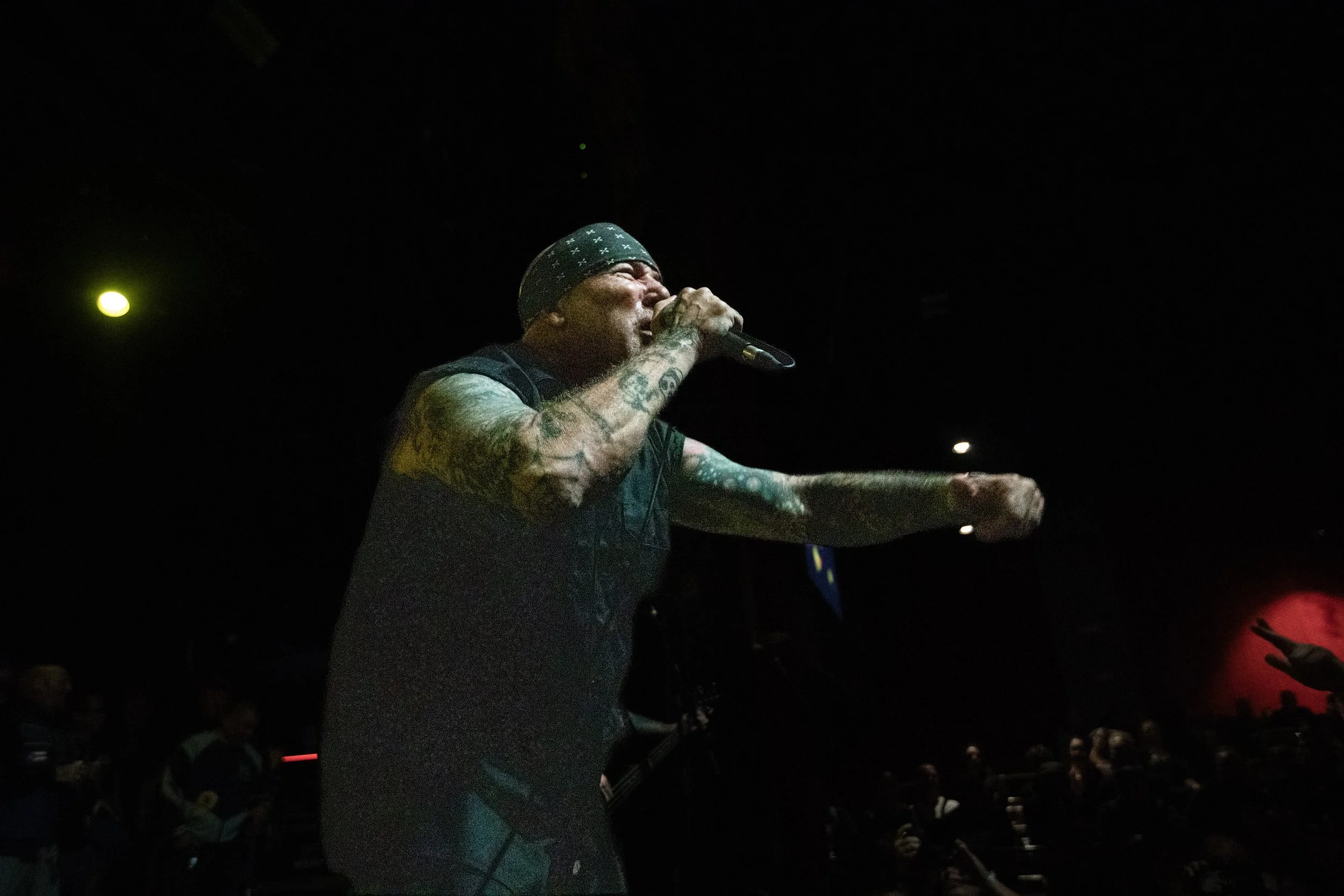
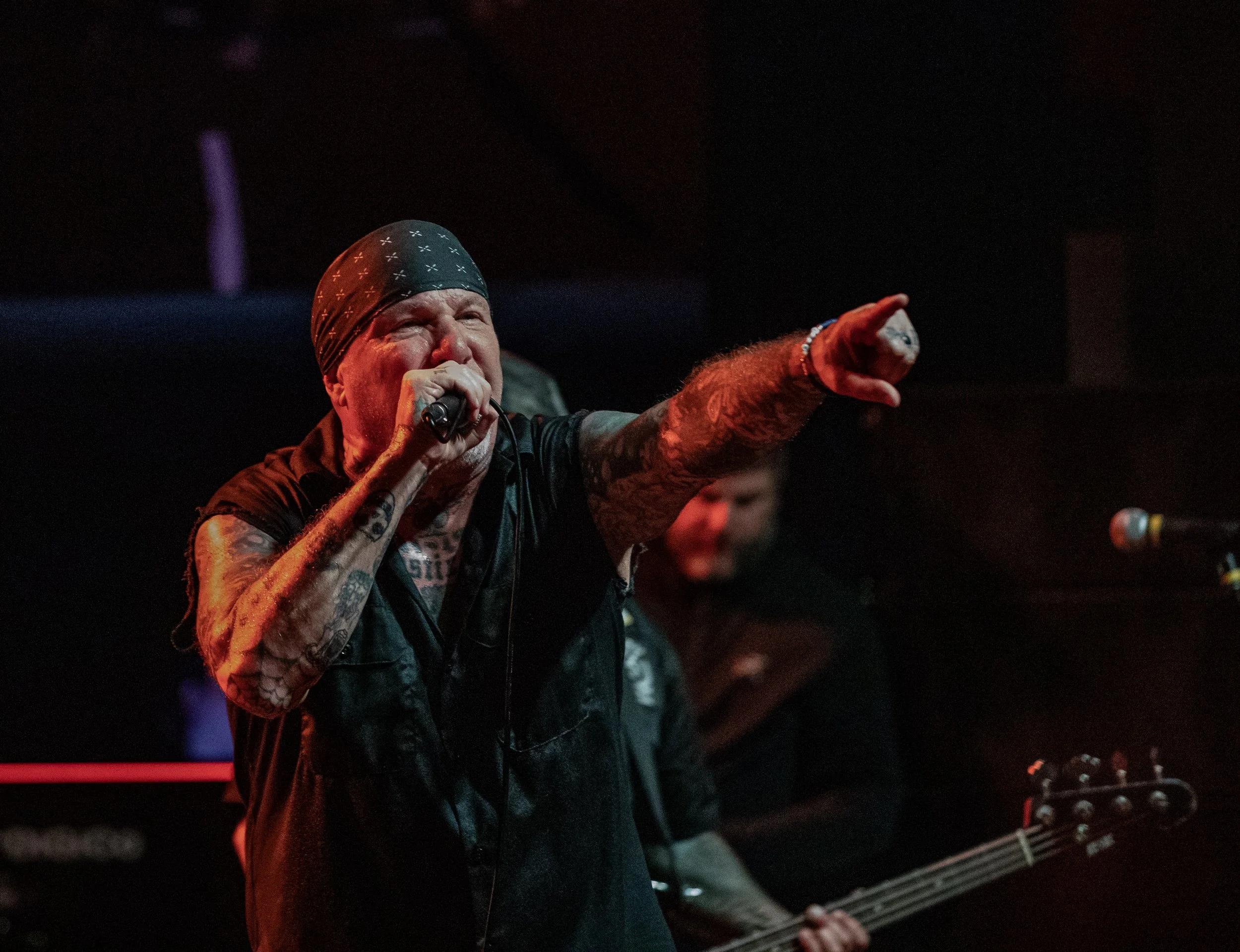
Kelly's importance to Slapshot is hard to overstate. As “Choke,” he created a frontman persona that is immediately identifiable: the bark, the rasp, the clipped phrasing and the sense that every word is being delivered directly at you.
Alice Cooper created Vincent Furnier's alter ego. David Bowie created Ziggy Stardust. Iggy Pop transformed his physical body into performance art. Johnny Rotten developed a stage personality that became inseparable from John Lydon.
“Choke” is Jack Kelly's creation.
But unlike some rock alter egos, Choke never seemed completely separate from the person underneath. The character works because it amplifies something already present in Kelly: the aggression, humor, skepticism and distinctly Boston refusal to suffer fools gladly.
His voice is as important to Slapshot as any guitar riff. Because it is so distinctive, even the simplest Slapshot song acquires a personality that the instrumentation alone couldn't provide. Slapshot without Choke would be missing something essential, something that has allowed the band to remain Slapshot even as the lineup has changed around him.
That consistency was laid bare at the final show.
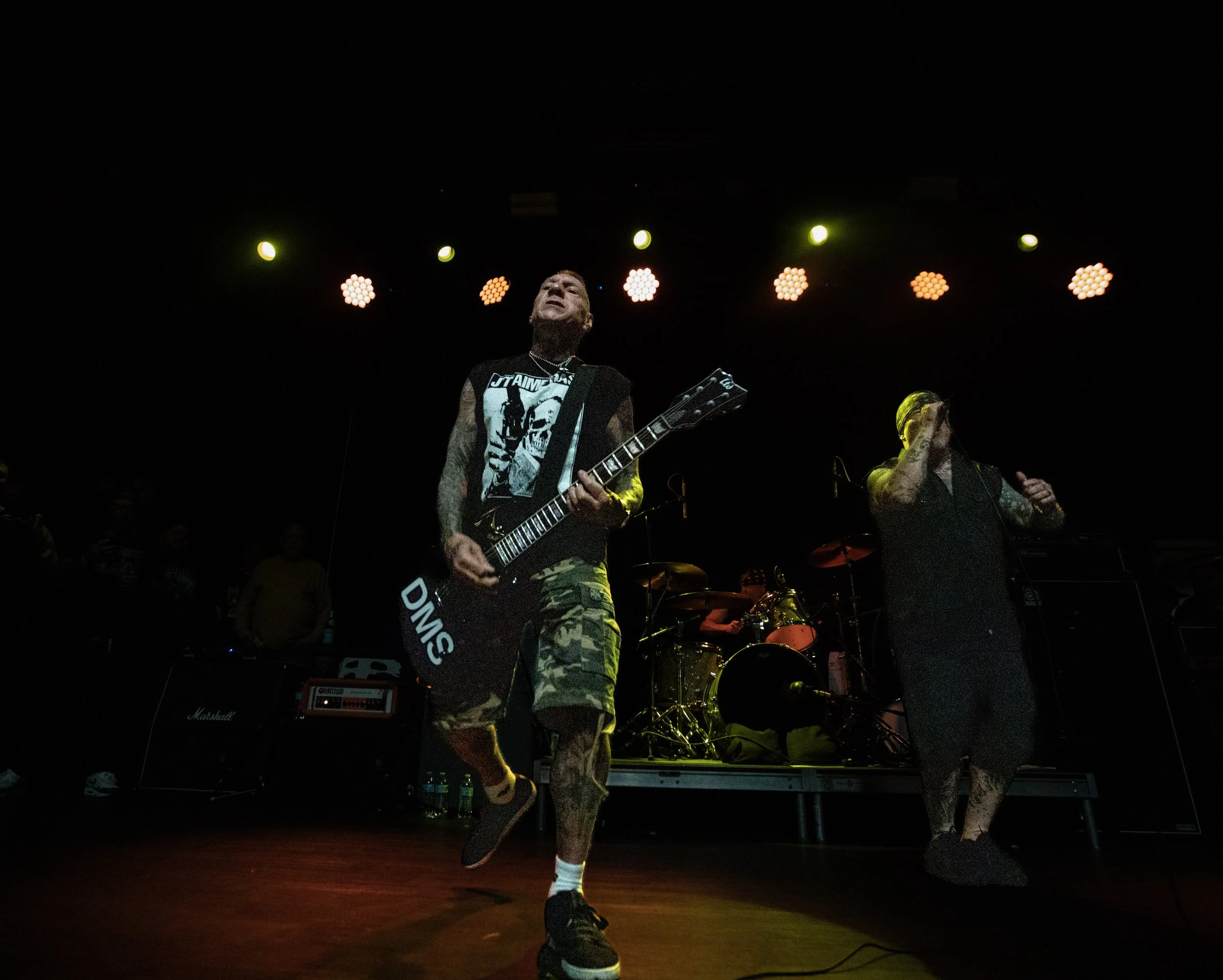
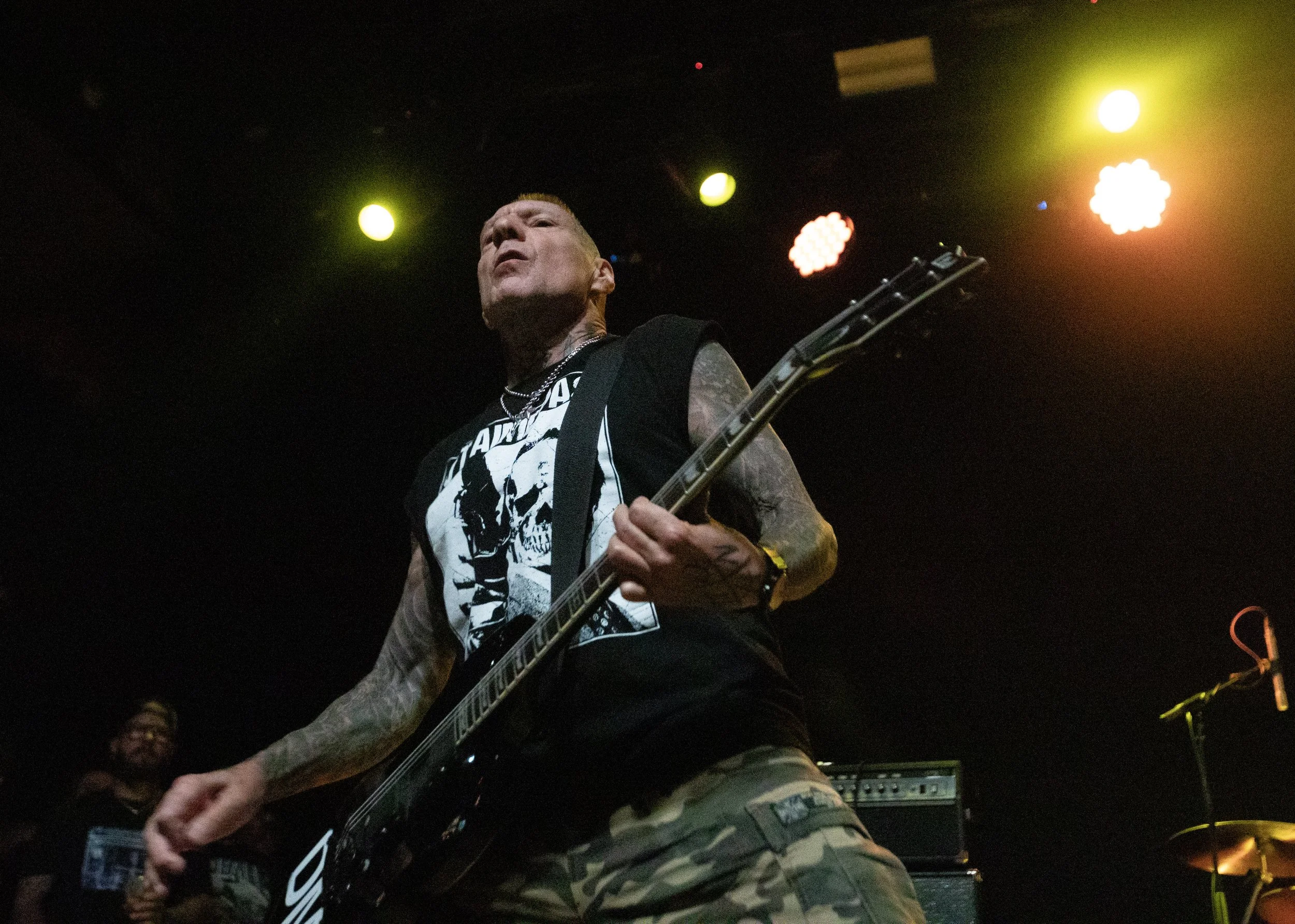
Slapshot's most recent lineup (Kelly, bassist Ryan Packard, drummer Corey Koniz and guitarist Ty Tonkin was in fine form for their final performance. After a full day of music featuring local, national and international hardcore bands including BOLD, DYS, Wisdom in Chains, Bent Armie, Time X Heist, Aggressive Dogs and Neighborhood Shit, Slapshot finally took the stage.
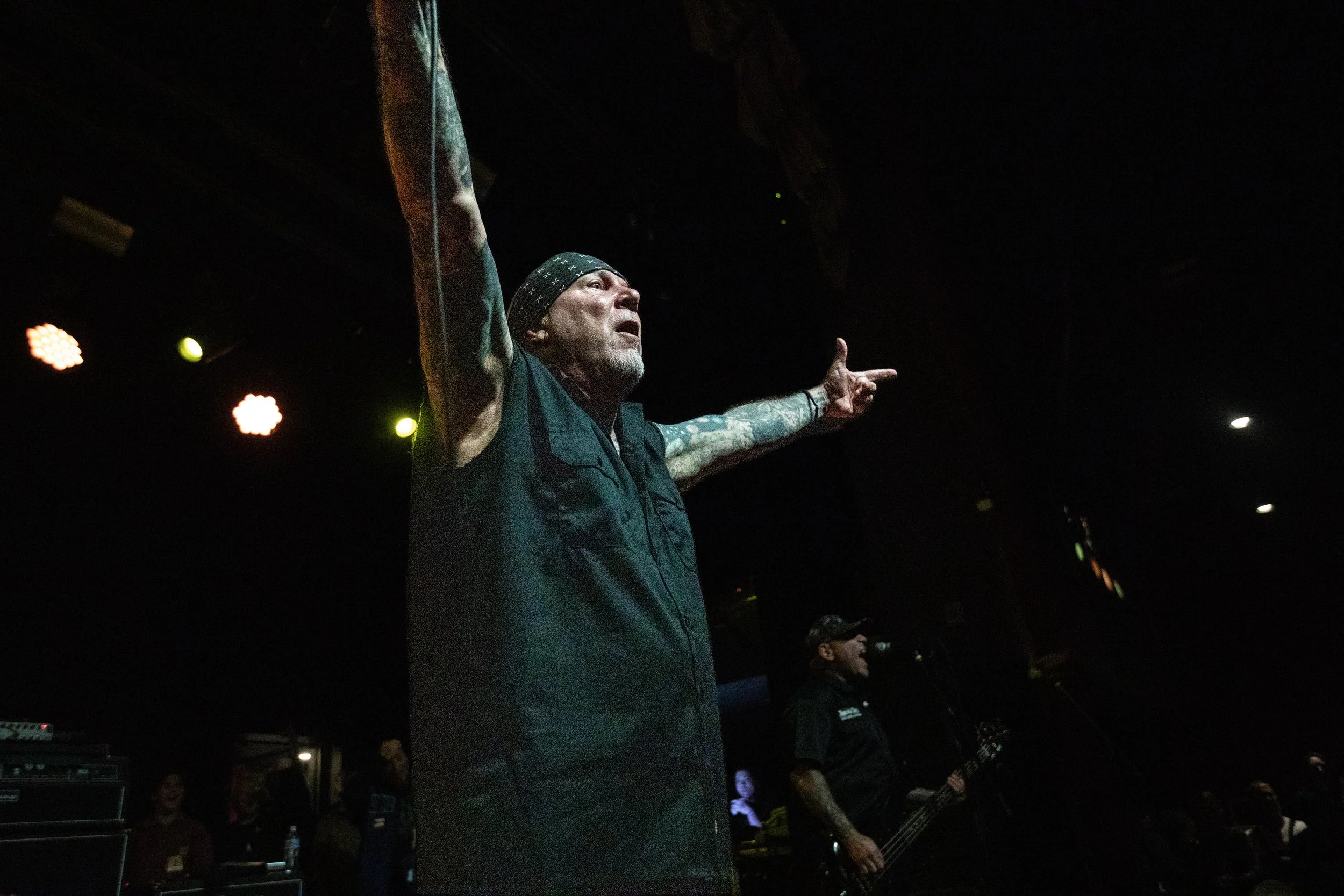
The wings were filled with members of other bands, industry people, friends and family. There was an unmistakable sense of celebration, but also anticipation. Nobody knew exactly what the band had planned for its final performance or how the crowd would respond.
Slapshot answered by doing what Slapshot has always done.
Fittingly, the band opened with Back on the Map, the very first song Kelley wrote for Slapshot. They played a 25-song set featuring longtime favorites, songs drawn from across their history and a couple of familiar covers, including the Smith's Bigmouth Strikes Again, perfectly reworked to fit the Slapshot sound. From the very first note, Kelly and the band played their brand of musical high-energy, riff heavy songs that are made to engage the crowd and had the audience singing along. The best Slapshot songs leave an imprint on your brain the same way that a good pop song leaves an indelible mark and has you repeatedly singing the song in your head long after it's over.
Patrick Flynn joined the band onstage for a rousing version of “Chunks,” a song from Kelly's pre-Slapshot band Last Rights. After the song was over, Flynn punctuated his performance by taking a running start and diving off the stage into the audience for good measure.
There were video testimonials between songs and sentimental comments from Kelly and Packard. But otherwise, the show was remarkably free of ceremony. It was, for the most part, business as usual. And that seemed appropriate.
Kelly prowled the stage with a gleeful, menacing energy and the same physical authority he has brought for decades, looking fit, focused and completely in command. The music was signature Slapshot: fast, hard and brutally efficient old-school hardcore punk.
The band can play extremely fast, but speed alone has never been its secret. Some of its most effective moments come when the tempo drops and the music becomes heavier. Those slower passages create tension and make the inevitable acceleration hit harder. Slapshot's music works because it understands the physical architecture of hardcore: compression, release, impact.
The band closed the evening unceremoniously with the very apropos Hang Up Your Boots.
The sold-out Big Night Live was a fitting place for the occasion, although the room was a long way from the smaller spaces where Slapshot and Boston hardcore were originally built. I heard several fans complaining about the barricade that eliminated stage diving, and the moshing and crowd surfing were relatively tame compared with earlier Boston performances. At the last Slapshot show I saw, the band actually had to stop the performance while paramedics removed a badly injured fan.
That difference says something about how much the world around hardcore has changed.
Slapshot has spent their entire career playing music that was never designed to survive. Hardcore started as music that was immediate, disposable and territorial. It was created by people who weren't expecting or looking for commercial success. There was little expectation that anyone outside their own neighborhood would care.
Somehow, the music endured, and more importantly so has the community.
Sharing the stage with New York's Agnostic Front gave the final Slapshot performance some additional significance. These were two institutions of American hardcore, representing two cities whose scenes helped establish the genre. There has always been a competition between the two cities and a level of antagonism, especially coming from fans. But on this night, Boston and New York stood together at the end of one band's story, connected by a culture that has long since expanded beyond the rooms and neighborhoods where they began.
The final show wasn't just a retirement party for an old hardcore band. It was a celebration of a musical culture that somehow outlived its own expiration date, a community that survived its divisions and a band whose stubbornness became its appeal and defining artistic principle. Their importance isn't based on commercial success or musical innovation. Their refusal to pursue either is probably central to their significance.
Slapshot survived by refusing to change and become something else, and they are going out sticking to their original identity without compromise.
For Slapshot, the circle is complete. The band was born when the Boston hardcore scene seemed to be at its end, but for more than four decades it continued to insist that traditional Boston hardcore still mattered. Whether that insistence is viewed as artistic integrity or artistic stagnation will always be part of the debate surrounding the band’s legacy.
But there is no denying that Slapshot will always hold a special place in Boston music history, a band as tough, direct, and uncompromising as the hockey culture that inspired its name.
SETLIST
• Back on the Map
• No Friend of Mine
• I've Had Enough
• I Told You So
• Old Tyme Hardcore
• Silence
• No Time Left
• Bigmouth Strikes Again (The Smiths cover)
• In Your Face
• Firewalker
• Where There's Smoke
• Crossover Sucks
• Watch Me Bleed
• Kill Your Parents
• Say Goodbye
• Desensitized
• Chunks (Last Rights cover - with Patrick Flynn)
• Might Makes Right (Negative FX cover)
• Punk's Dead, You're Next
• 16 Valve Hate
• What's at Stake
• 108
• Chip on My Shoulder
• Step On It
• Hang Up Your Boots