The Genius of Van Morrison: Inspiration and Indifference
Boch Center Wang Theatre Boston, MA, March 3-4, 2026
Story and Photography by JD Cohen
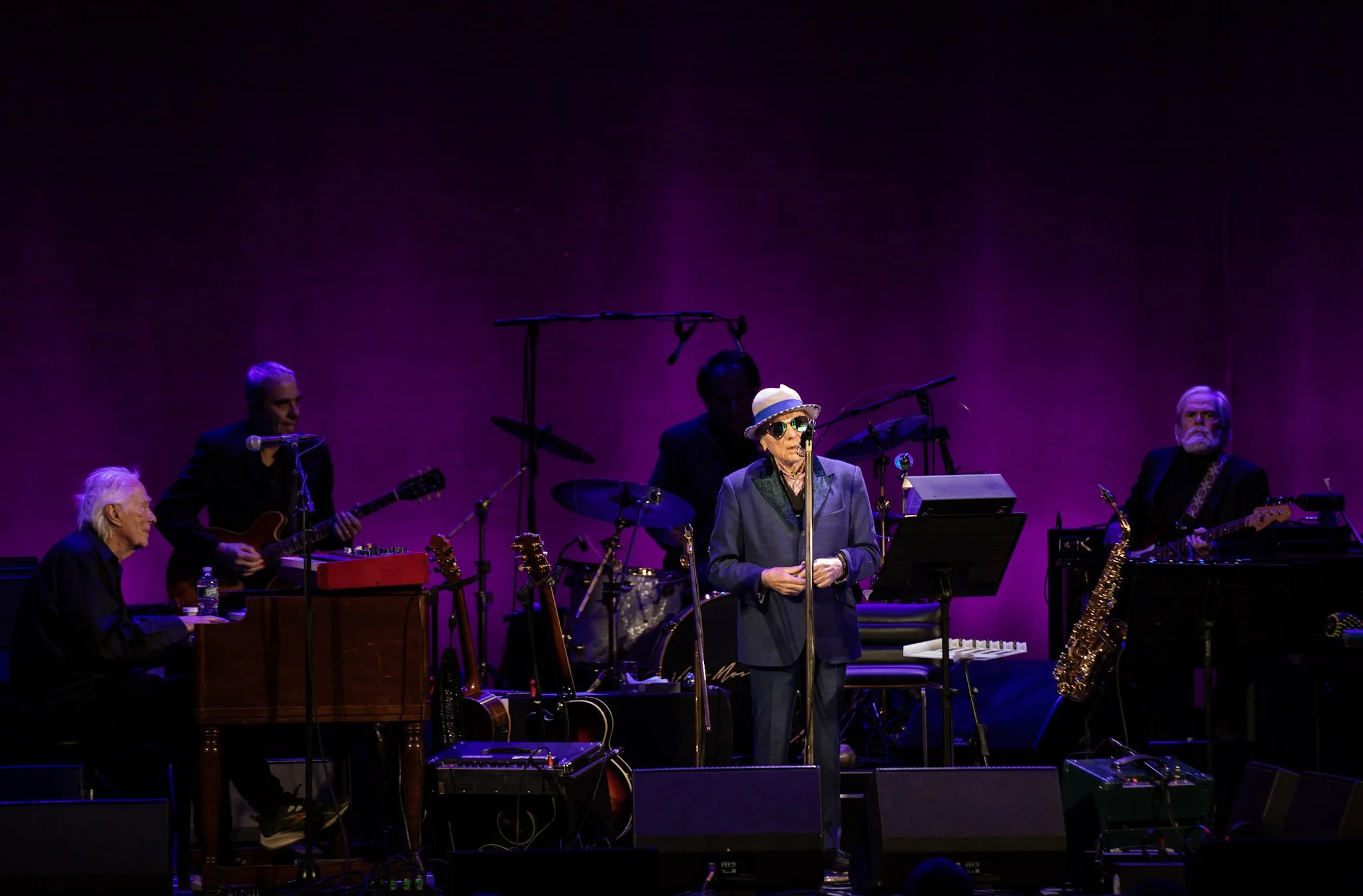
Few artists in modern popular music have inspired the kind of reverence associated with Van Morrison. For more than six decades, Morrison has produced music that seems to reach toward something beyond ordinary songwriting: a search for memory, transcendence, and spiritual illumination. Van Morrison’s early recordings are widely viewed to be among the greatest recordings in the history of rock and popular music. For many, Morrison’s music is not simply enjoyable; it is profoundly moving, transcendent and transformative.
I was first introduced to Van Morrison’s music by my late uncle Jeremy Zwelling, who shared with me among the many gems in his record collection a copy of Morrison’s Tupelo Honey. I was probably fifteen years old, and I immediately fell in love with the album. The love for other albums Astral Weeks, Veedon Fleece, and Moondance would come later as I began exploring Morrison’s vast catalogue. Over time I grew to appreciate almost everything Morison recorded, but nothing initially struck me with quite the same intensity and listening pleasure as Tupelo Honey. Hearing Van Morrison for the very first time was uniquely moving.
Several years later, while studying abroad, I saw Van Morrison live for the first time at London’s historic Dominion Theatre. The eleven-night run in June 1984 felt more like a musical event than a concert series. The Dominion shows of 1984 are often cited among the highlights of Morrison’s live performances during the 1980s. Seeing him in that setting confirmed that the emotional power of his recordings could be fully realized—and often amplified—on stage.
As Morrison moved through the 1980s and beyond, he entered a new phase of his career, deepening the intellectual and cultural foundations of his work. Increasingly, his music drew on Irish literary and cultural traditions. Inspired by writers such as W. B. Yeats and James Joyce, Morrison began incorporating poetic references, Celtic imagery, and themes of mysticism, landscape, and memory into his lyrics. His songs became vehicles for literary reflection and spiritual exploration. His collaborations with traditional Irish musicians The Chieftains further strengthened his connection to Ireland, blending Irish folk traditions with his distinctive vocal style and improvisational instincts.
As had been the case for most of his career, Morrison’s music during this period stood apart from the dominant trends of popular music. While the recording industry moved through successive waves, from disco and punk to the synthesizer-driven pop of the 1980s, grunge and alternative rock of the 1990s, and eventually the digital and electronic production of the modern era Morrison continued to pursue a very personal musical path rooted in his own history and the music he was exposed to from an early age including rhythm and blues, jazz improvisation, gospel, and Celtic folk traditions.
During the 1980s in particular, when much of the music industry was focused on polished studio production and electronic instrumentation, Morrison released contemplative, spiritually oriented albums like Common One and Beautiful Vision. These recordings featured extended arrangements, poetic lyricism, and jazz-influenced improvisation. His work from this era reinforced a lifelong commitment to timeless musical forms and themes of mysticism, literature, and cultural memory. Morrison’s resistance to commercial trends gave his music a distinctive character, allowing it to age on its own terms and reinforcing his reputation as an artist guided more by personal vision than by the shifting currents of the music industry.
But appreciating Van Morrison’s music is not simply a matter of musical taste. What draws so many listeners back to his work again and again is the deep spirituality that runs through it—a restless yearning for transcendence. Whether invoking sacred imagery, channeling the ecstatic pulse of gospel, or tracing the quiet holiness of memory and place, Morrison’s songs often feel like prayers set to rhythm. There is a sense that he is reaching toward what he once called “the healing game” the belief that music has the power to lift us beyond ourselves, a force that has powers beyond mere entertainment.
Then there is the feeling at the center of Morrison’s singing. His voice, which is capable of sharp turns, whispered asides, and sudden bursts of soul-shouting intensity conveys emotion in ways that seem completely spontaneous and almost involuntary. Morrison has often spoken about his desire to capture a certain feeling in his music rather than pursuing technical perfection. When he leans into a phrase and stretches it past the expected beat, it feels as though he is chasing something just beyond reach. Few artists evoke these kinds of layered emotional responses so powerfully: joy tinged with melancholy, romance threaded with spiritual longing, tenderness mixed with defiance.
The beauty of Morrison’s songwriting and arrangements only deepens that connection. His melodies often feel timeless, drawing simultaneously on Celtic lilt, blues inflection, and jazz phrasing. Horn sections swell, acoustic guitars shimmer, and Hammond organ lines drift like smoke through a cathedral. Even his simplest compositions evoke a strong sense of atmosphere, of place, season, and memory, of sunlight filtering through trees or mist hanging over a riverbank. The images are often literary and timeless.
What makes Morrison’s music truly unique is the tension he sustains between discipline and abandon. He is meticulous about sound, phrasing, and arrangement, but also capable of losing himself completely in the moment. The blend of structure and spontaneity gives his performances their electricity. When Morrison is at his best, the music feels alive, always on the verge of becoming something slightly different from one performance to the next.
Ultimately, the love many listeners feel for Van Morrison’s music comes from his rare ability to hold sorrow and beauty, structure and freedom, transcendence and struggle within a single song or even a single moment.
Yet Morrison’s music has never been universally embraced, and it is not difficult to understand why. His personal blend of soul, jazz, blues, folk, and Celtic influences often fall outside the commercial mainstream. His improvisational and unique vocal style can sound unconventional to casual listeners, and many of his songs unfold slowly, revealing their depth only through repeated listening. For some audiences, what others hear as spiritual, meditative, and emotionally rich can instead sound repetitive, meandering, subdued and boring.
His private and at times controversial public persona has also shaped how people perceive his work. Morrison can be famously combative and openly hostile to the music industry, the press and even his own fans. Combined with the sheer scale of his catalogue, these factors can make Morrison’s artistry difficult to fully appreciate.
And the catalogue is indeed enormous. Morrison has released forty-eight studio albums to date, in addition to live recordings and compilations. His output is staggering and not always uniformly inspired. Much of his later work carries a similar stylistic feel distinctively Morrison, yet often more nostalgic than innovative, frequently paying tribute to the music of earlier eras, from country and blues to jazz standards and skiffle. Within such a massive body of work, truly inspiring moments can sometimes be harder to find.
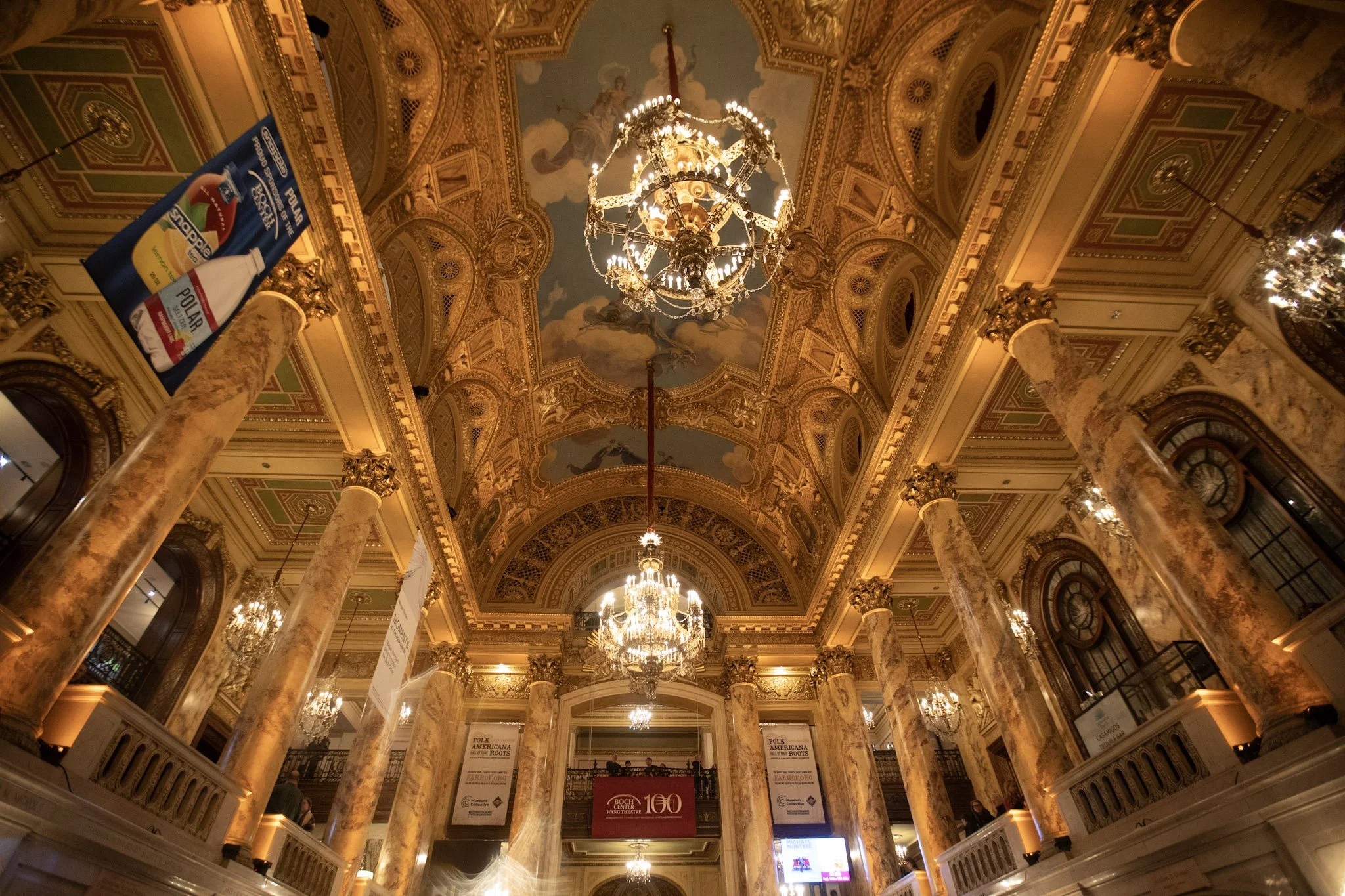
His most recent album, Someone Tried to Sell Me a Bridge, continues that late-career pattern. Like many of Morrison’s recent releases, it is carefully crafted and professionally arranged, but it does not always capture the urgency or creative spark of his most celebrated recordings. So when Morrison announced a tour in support of the album, I decided somewhat ambivalently to see the master once again, this time at the ornate Boch Center Wang Theatre in Boston, where he performed on March 3 and 4, 2026.
Approaching a concert by an aging rock legend inevitably brings a degree of skepticism. Too often such shows become an exercise in nostalgia rather than living performances. The voices that once defined an era lose their range, the tempos slow to accommodate fading stamina, and the spark that once drove the music feels routine.
Audiences still turn out in large numbers and pay a lot of money to see artists like Bob Dylan, Rod Stewart, or Paul McCartney. Yet the experience usually feels less like witnessing a vital performance and more like paying respect to musical history. Expectations are usually modest, and fans are frequently forgiving, valuing the experience of seeing a legend, a massive stage show or an Instagramable moment more than a quality performance.
That same question inevitably comes up when considering a Van Morrison concert. His live shows have always carried a reputation for being unpredictable sometimes electrifying, sometimes perfunctory.
Going with very low expectations, I was pleasantly surprised and honestly atonished and amazed to find something completely wonderful about Van Morrison’s performance in Boston.
Performing largely material connected to his recent work while drawing on a wide range of blues and jazz traditions, Morrison and his superb band delivered a performance that felt vibrant, joyful, and fully alive. The set list included music of John Lee Hooker, Junior Wells, Sonny Boy Williamson, Louis Jordan, Eddie “Cleanhead” Vinson, Fats Domino, and Sonny Terry and Brownie McGhee.
At eighty years old, Van Morrison continues to perform with a voice that remains astonishingly strong and controlled. While many singers experience a noticeable decline in range and power with age, Morrison’s vocals still carry the weight, clarity, and authority that defined his early recordings. When he steps to the microphone, there is no sense of strain or compromise.
His breath control remains steady even while playing saxophone throughout the set allowing him to shape phrases with precision and sustain notes effortlessly. He moves easily between restrained, conversational passages and powerful, soaring refrains, often punctuated by his trademark scatting and spontaneous vocal improvisations. Rather than softening his performances to accommodate age, Morrison continues to sing with conviction and force. At eighty, his voice is not merely intact, it is formidable.
He was supported by an outstanding band that included John Allair on Hammond organ and vocals, Mitch Woods on piano, Anthony Paule on guitar, David Hayes on bass, Bobby Ruggerio on drums, and Omega Rae Brooks and Larry Batiste on backing vocals. Guitar legend Elvin Bishop also joined the ensemble.
Making very little contact with the audience, Morrison played guitar, harmonica, and saxophone throughout the evening, at times appearing amused, at other moments slightly annoyed with his bandmates, as he directed the musicians through changes and solos. The band was exceptionally tight and clearly well rehearsed. The ninety-minute set moved with remarkable momentum, never settling into a lull.
The guitar interplay between Elvin Bishop and Anthony Paule was particularly impressive, while Omega Rae Brooks delivered powerful backing vocals that added depth and energy.
Although the set lists for the two nights were largely similar, Morrison made small adjustments each evening, adding different songs from his own catalogue and subtly reshaping the flow of the performance. Both shows concluded with a rousing version of “Gloria,” which brought the audience to its feet and provided a fittingly upbeat ending to the shows.
For an artist now in his ninth decade, Van Morrison’s Boston run served as a powerful reminder that he remains a legendary figure and a musician still capable of delivering a compelling and deeply satisfying live music experience, an experience that doesn’t rely on nostalgia, pyrotechnics, audio enhancement or a big light show , proof that Van Morrison is a singular talent with a tremendous gift that may not appeal to everyone but has not been slowed or diminished by the passage of time.
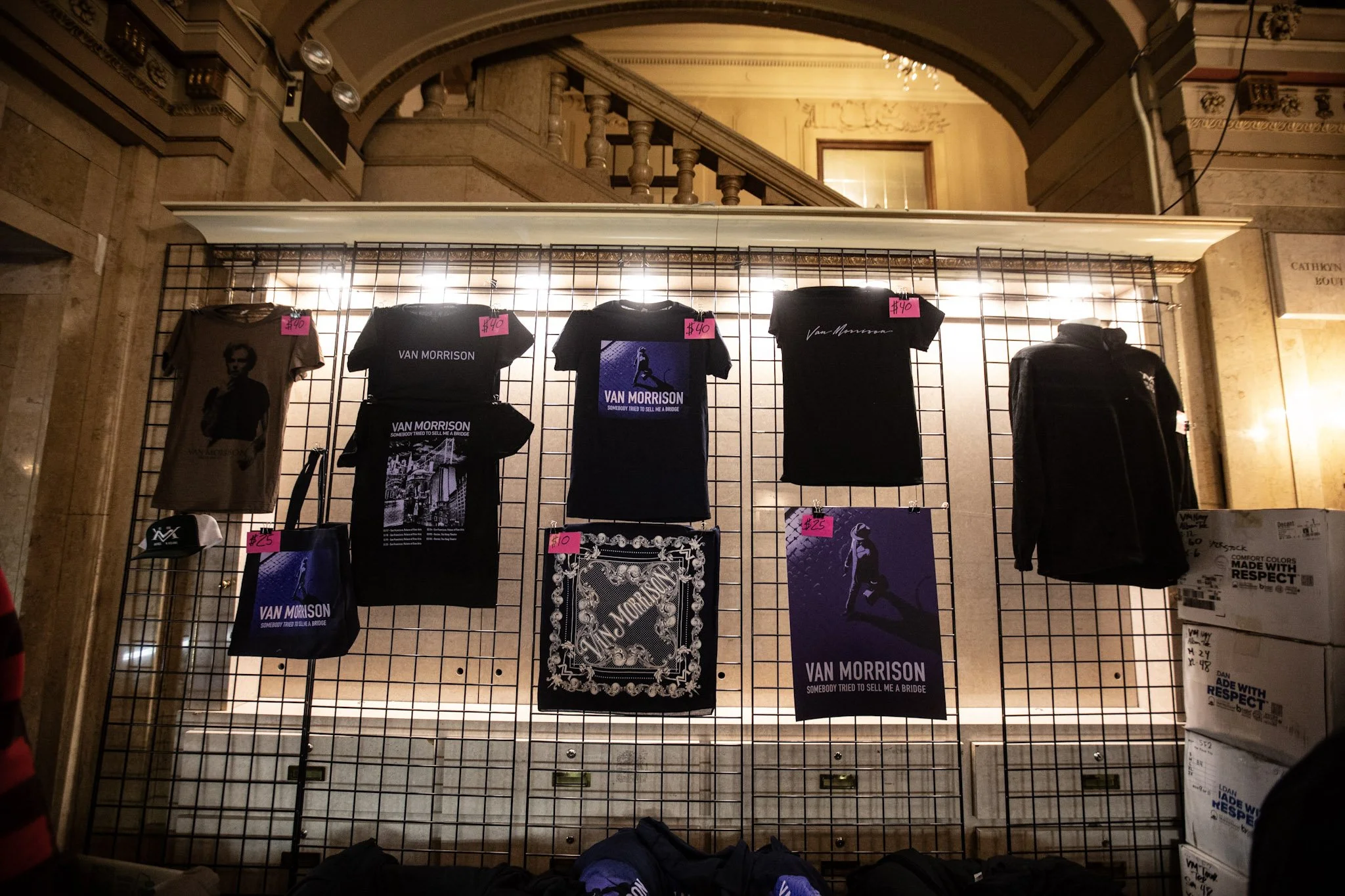
SETLISTMarch 4, 2026
Kidney Stew Blues (Eddie “Cleanhead” Vinson cover)
Snatch It Back and Hold It (Junior Wells’ Chicago Blues Band cover)
Ain't That a Shame (Fats Domino cover)
Go to the High Place in Your Mind (John Allair cover)
Aint that a trip
Baby, Please Don't Go / Got My Mojo Working
Dweller on the Threshold
Little Village
Into the Mystic
You're the One (That I Adore) (Bobby “Blue” Bland cover)
Deep Blue Sea (John Lee Hooker cover)
I Believe to My Soul (Ray Charles cover)
Broken Record
Madame Butterfly Blues (Dave Lewis cover)
Early in the Mornin' (Louis Jordan and His Tympany Five cover)
Help Me/Green Onions/Dont Start Crying/Custard Pie / Green Onions (Willie Dixon song outro)
Gloria
March 3, 20206
Kidney Stew Blues (Eddie “Cleanhead” Vinson cover)
Snatch It Back and Hold It (Junior Wells’ Chicago Blues Band cover)
Go to the High Place in Your Mind (John Allair cover)
Ain't That a Shame (Fats Domino cover)
Somebody Tried to Sell Me a Bridge
Can't Help Myself
(Sonny Terry & Brownie McGhee cover)
King for a Day Blues (Eddie “Cleanhead” Vinson cover)
Broken Record
When It's Love Time (Sonny Terry & Brownie McGhee cover)
Deep Blue Sea (John Lee Hooker cover)
Loving Memories
I'm Gonna Play the Honky Tonks (Marie Adams cover)
Madame Butterfly Blues (Dave Lewis cover)
Early in the Mornin' (Louis Jordan and His Tympany Five cover)
Help Me / Green Onions (Sonny Boy Williamson cover)
Into the Mystic
Gloria / Moondance / Gloria