George Coleman: Body and Soul
George Coleman - November 7, 2025 - The RegattaBar, Cambridge MA
Story and Photography by Joshua Touster
George Coleman Sr - Saxophone, George Coleman Jr - Drums, Steve Myerson - Piano, John Webber - Bass, Leo Larrett - Guitar, Sean Lyons (guest) - Saxophone
If one is blessed to reach a ripe old age it's inevitable that the body begins to weaken as time marches on. And, as it does, one can only hope that with the deterioration of the physical, the spiritual and artistic soul might continue to soar.
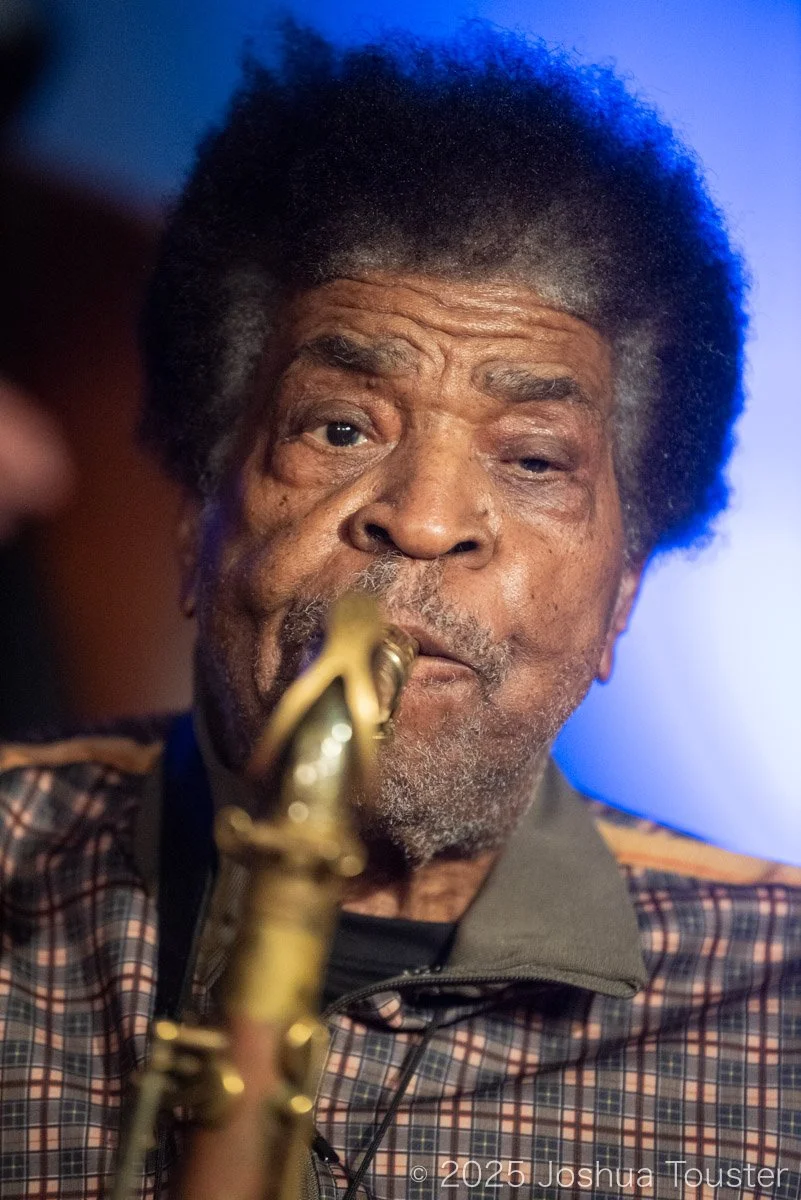
That seemed to be the case with George Coleman, the legendary ninety year old saxophone player, as he led a band of young musicians including his son, George, Jr., at the Regattabar in Cambridge, Massachusetts on November 7, 2025.
George Coleman, a renowned master of his instrument, with a long and noteworthy jazz career, was born on March 8, 1935 in Memphis Tennessee. Inspired by Charlie Parker, Coleman taught himself to play the alto saxophone as a teenager. He would eventually switch to the Tenor saxophone later in his career. Early on he began working with Ray Charles, before moving on to play with B.B. King in 1953. A few years later, in 1956, Coleman moved to Chicago to work with Gene Ammons and Johnny Griffin. He then joined the Max Roach quintet from 1958 through 1959. Coleman continued to play with many jazz greats including Slide Hampton, Ron Carter, Jimmy Cobb and Wild Bill Davis.
In 1963, Coleman joined the Miles Davis quintet, a band that also included Herbie Hancock on piano, Ron Carter on bass, and Tony Williams on drums. After two years with Miles, Coleman would leave the band, replaced by Wayne Shorter. After exiting the quintet, Miles continued to retain a high opinion of Coleman commenting, “George played everything almost perfectly...he was a hell of a musician.”
Coleman would go on to play with the likes of Lionel Hampton, Chet Baker, Clark Terry, Betty Carter, Horace Silver, Elvin Jones, Shirley Scott, Cedar Walton, Charles Mingus, Ahmad Jamal, Herbie Hancock, Johnny Hartman, Lee Morgan and many others during his long, and legendary 80 year career.
In 2015, George Coleman was named a Jazz Master by the National Academy of the Arts, the highest honor that the United States bestows upon a jazz musician.
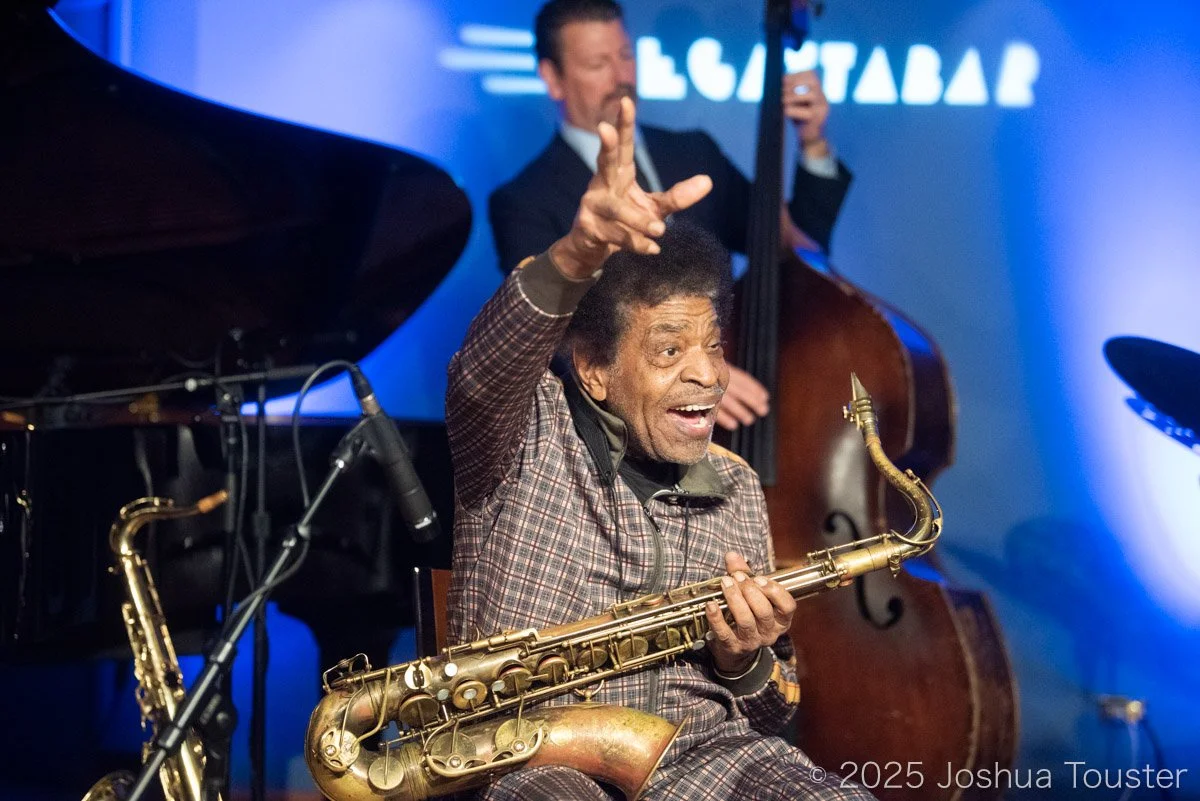
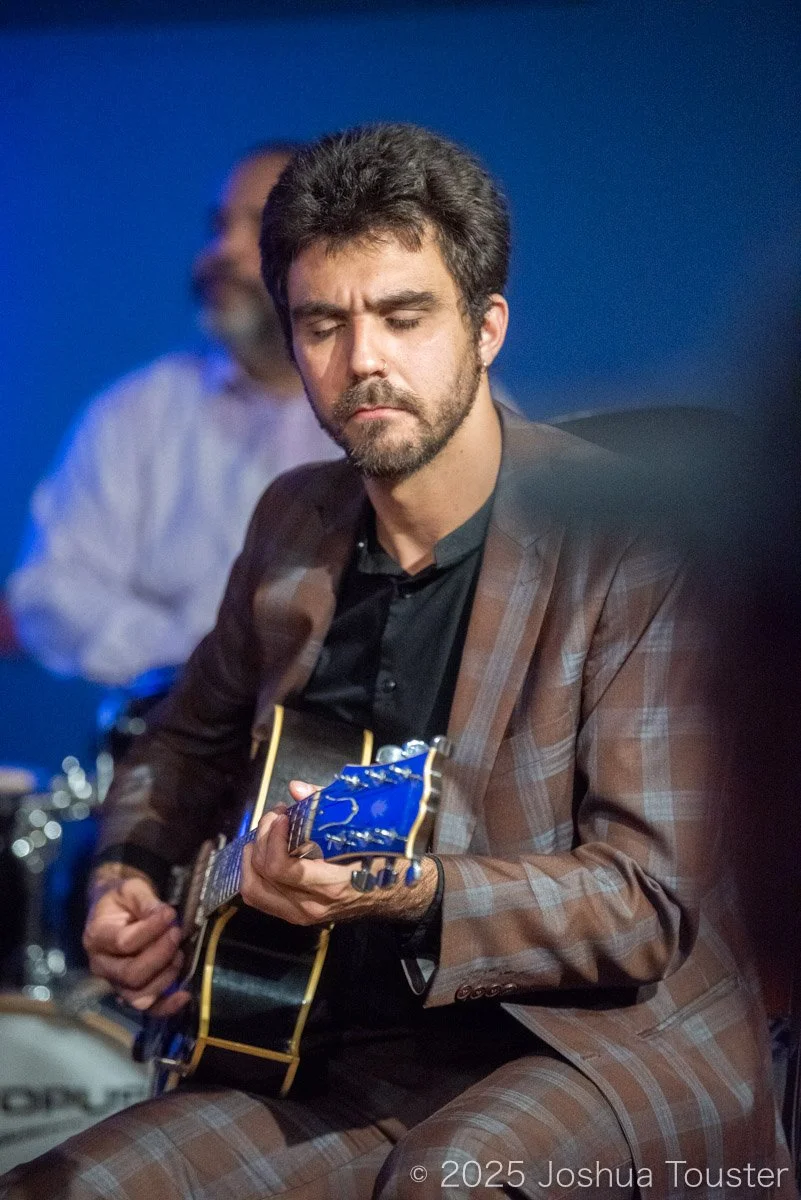
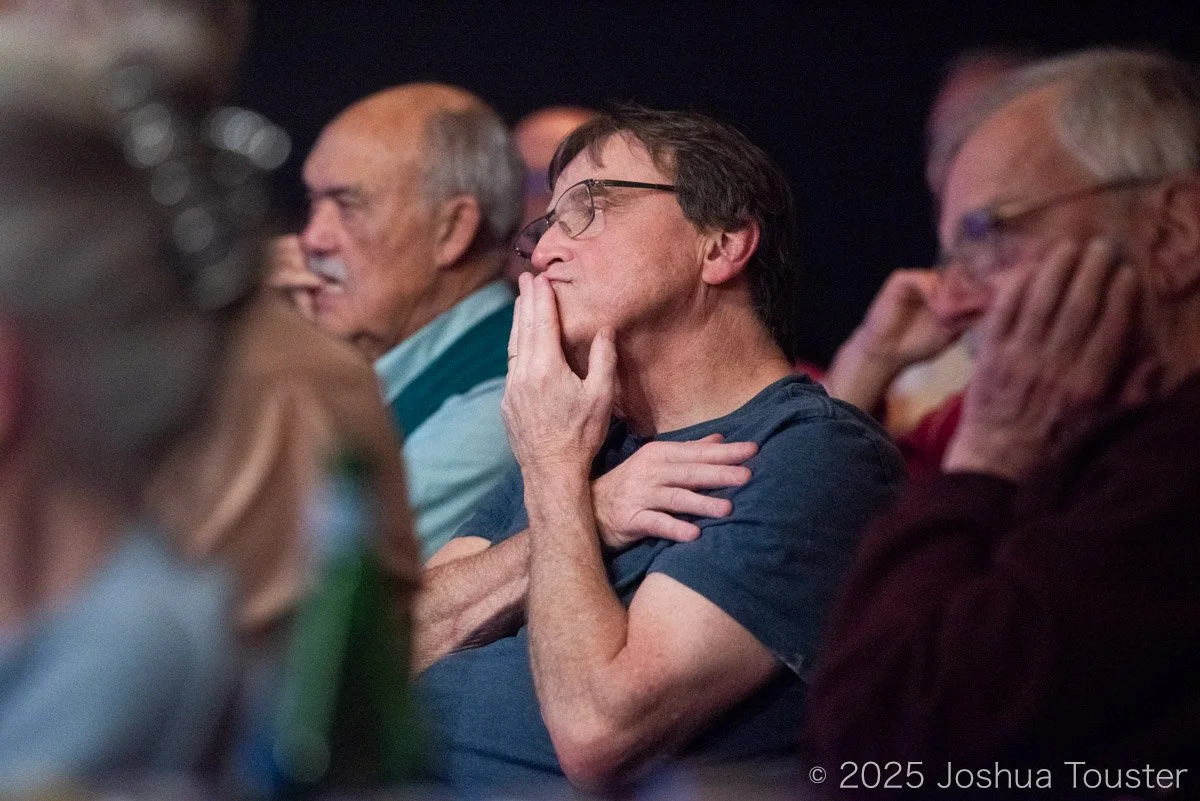
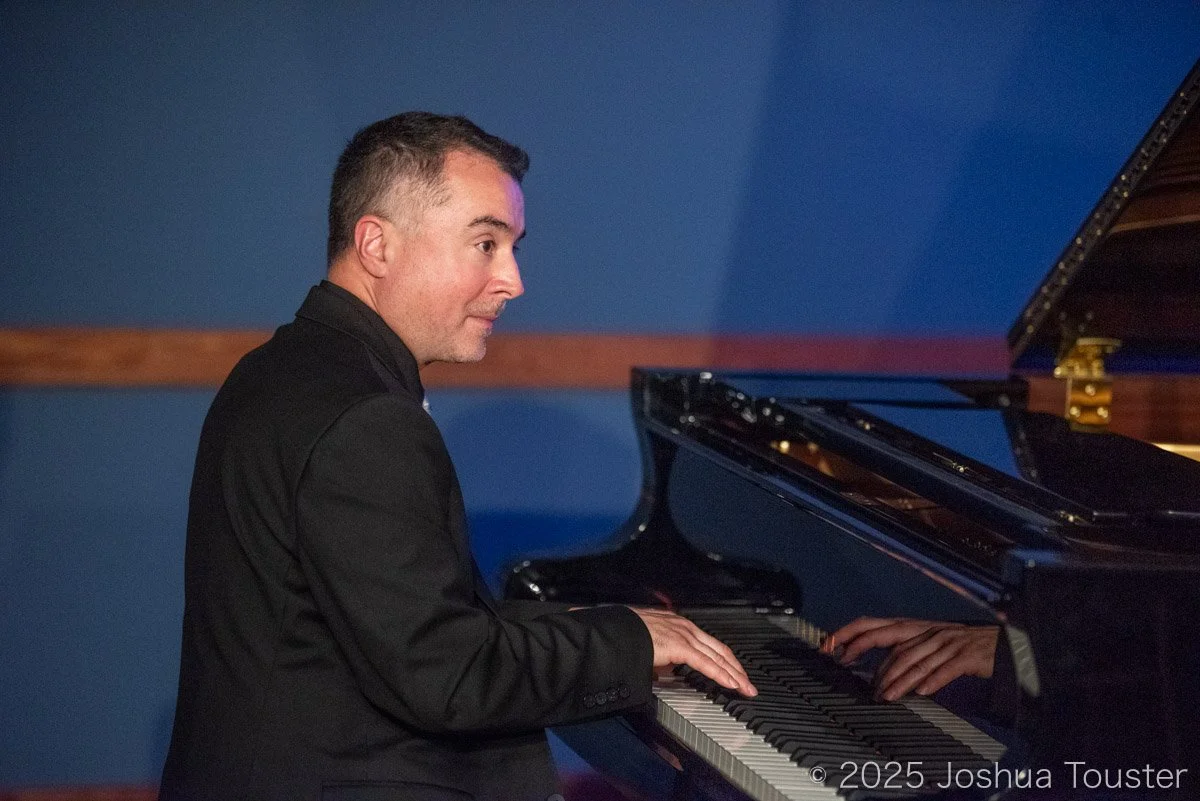
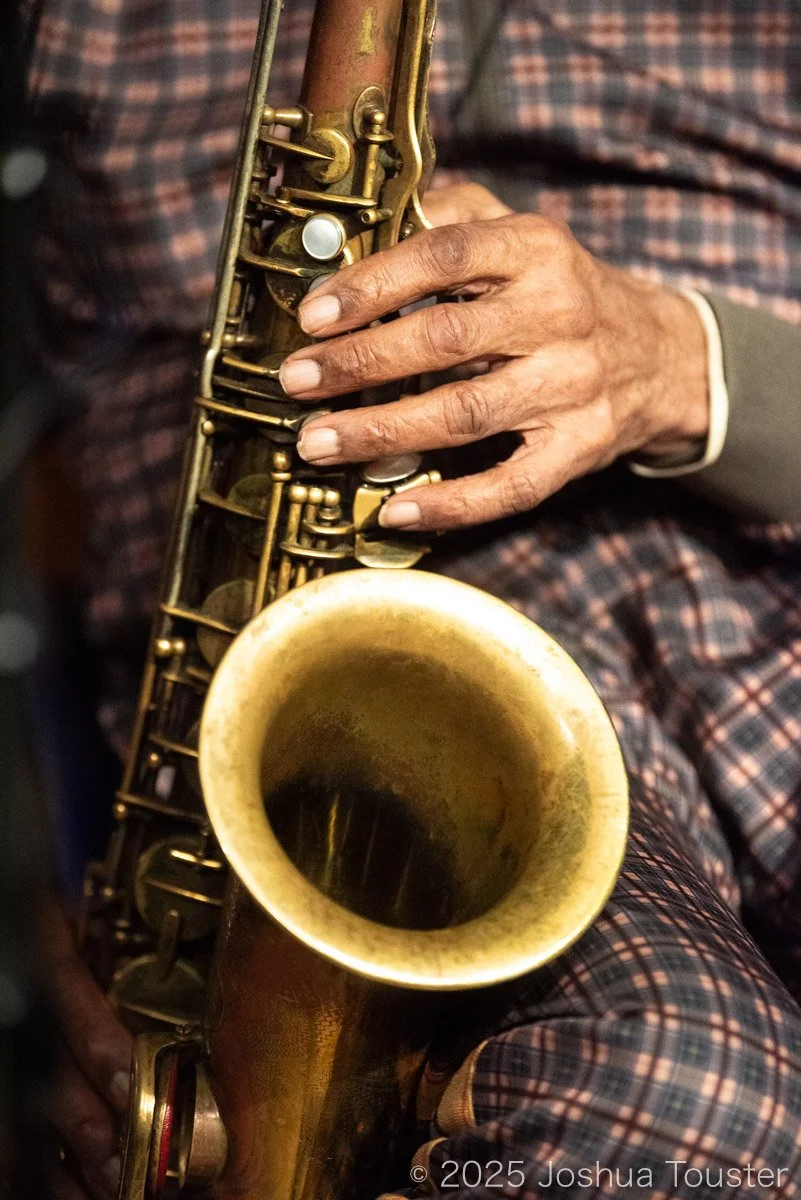
As the sold out Regattabar crowd waited with anticipation, Coleman made his way through the crammed together tables with the help of two companions to lean upon, and was led to a seat surrounded by his band. Coleman's frailness was obvious, and as he was handed his sax, the audience was not sure what to expect. As Coleman brought the instrument to his lips, the very first notes emanating from his sax made it clear that Coleman still possessed the deeply soulful tone that he had always been known for and, for the next two hours, the crowd was treated to the beauty and power of Coleman's playing.
For most of the set Coleman would alternate between his own soloing and nodding his appreciation, with a smile on his face, as he watched his much younger players take their turns in the spotlight.
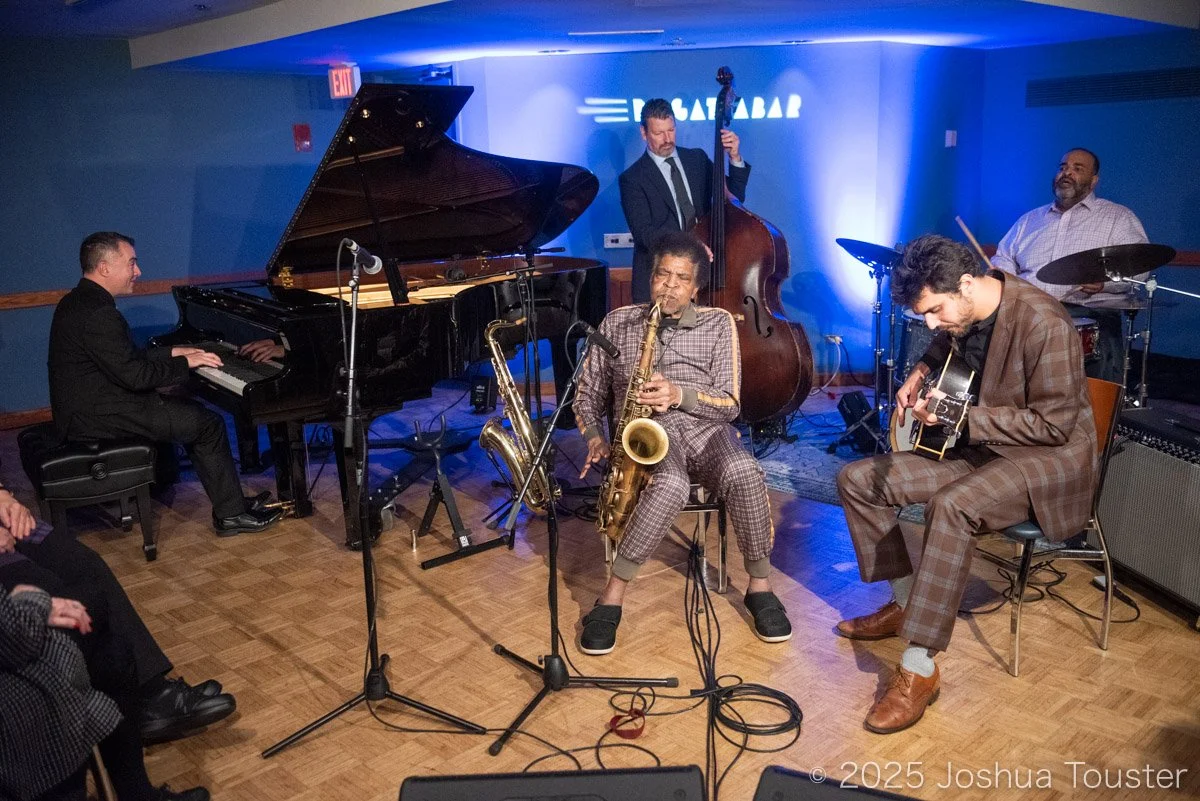

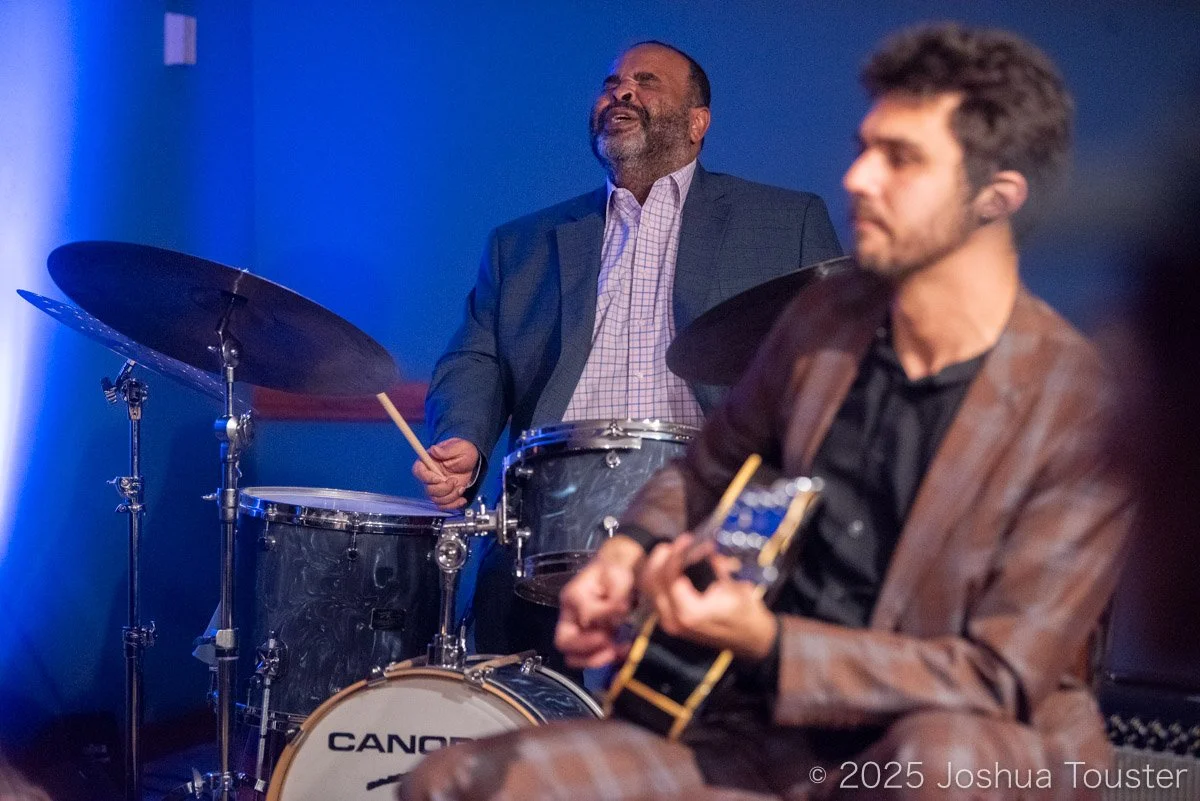
As the music wore on, Coleman moved into conductor mode, pointing to his bandmates indicating to them when to take their turn to begin soloing. But Coleman's conducting timing seemed a tad off, often pointing to a player to begin before the current solo being played had been completed, or when the designated players were not expecting it. This often led to some humorous moments, especially when the guitarist, Leo Larette, was pointed at only to shrug, indicating his designated solo couldn't be wedged in at that moment, and he was not even going to attempt to try.
The Regattabar usually has a very strict early show cutoff time of 9pm so the venue can turn the room around to prepare for the later performance. But as the early show’s deadline approached, there was no indication that Coleman was going to abide by any cutoff time, and certainly nobody was going to say anything about it to the grand old master.
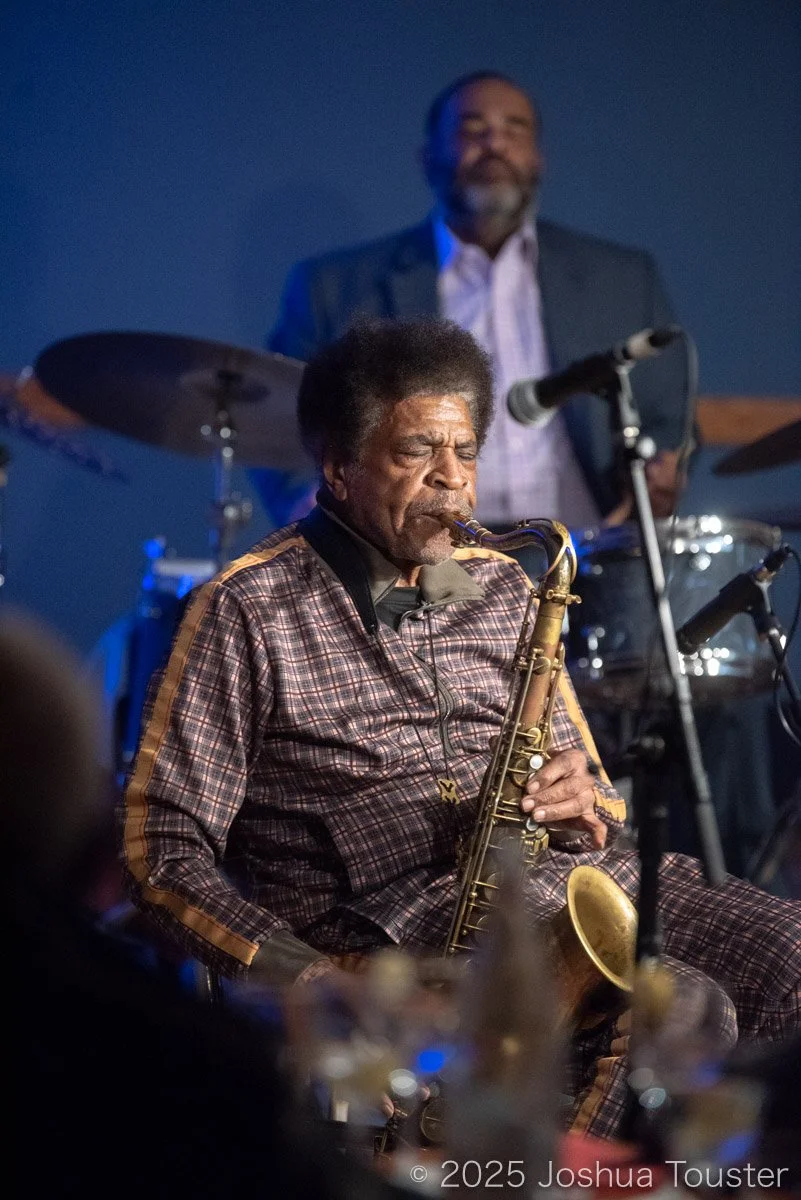
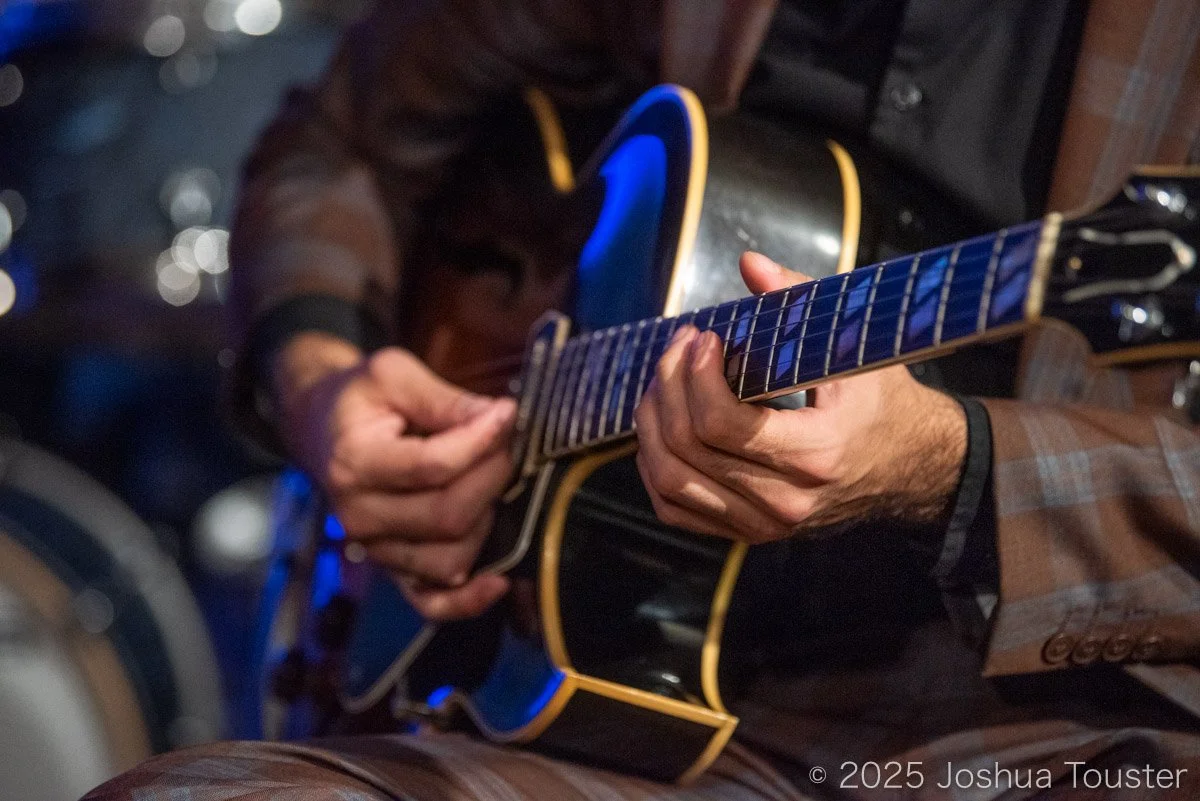
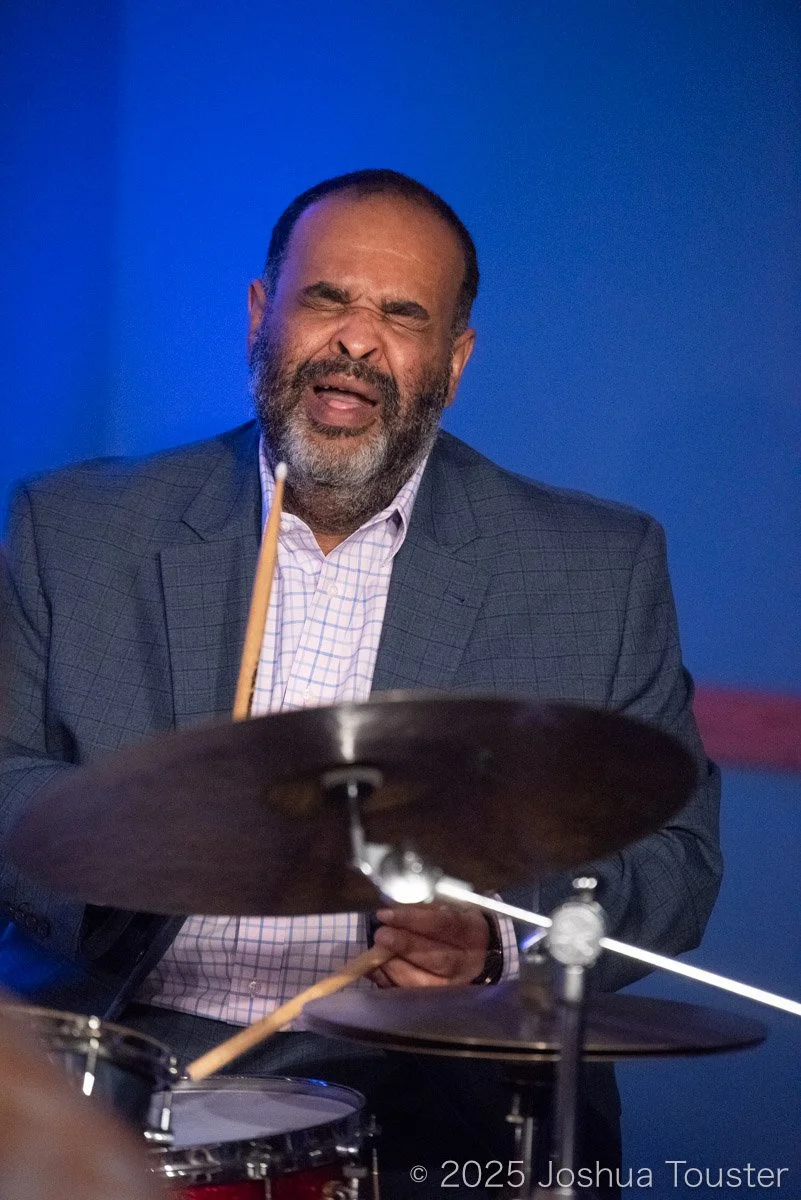
As the restless, late show crowd filled the hall outside waiting to enter, and some of the older audience members who came for the jazz equivalent of the early-bird special began to leave, the George Coleman band continued to play tune after tune, pushing the late show starting time even later by inviting local saxophonist Sean Lyons to sit-in on a few tunes, including the beautiful jazz standard, “I'll wait and pray” most famously associated with John Coltrane.
When the show finally ended to a standing ovation, about 30 minutes later than its appointed cutoff time, I asked Coleman's son, George Jr. if there was a set list available? “Nope,” was his reply, “My dad just wings it from show to show, and we never know what we're going to play next.”
As I made my way back home that night, I contemplated the process of aging, and hoped that, like George Coleman, we all might be blessed to have something deep inside of us that can make our soul still soar, as we continue our journey to our final resting place.